
Whole plant
Overall shape, height, branching and growth habit.
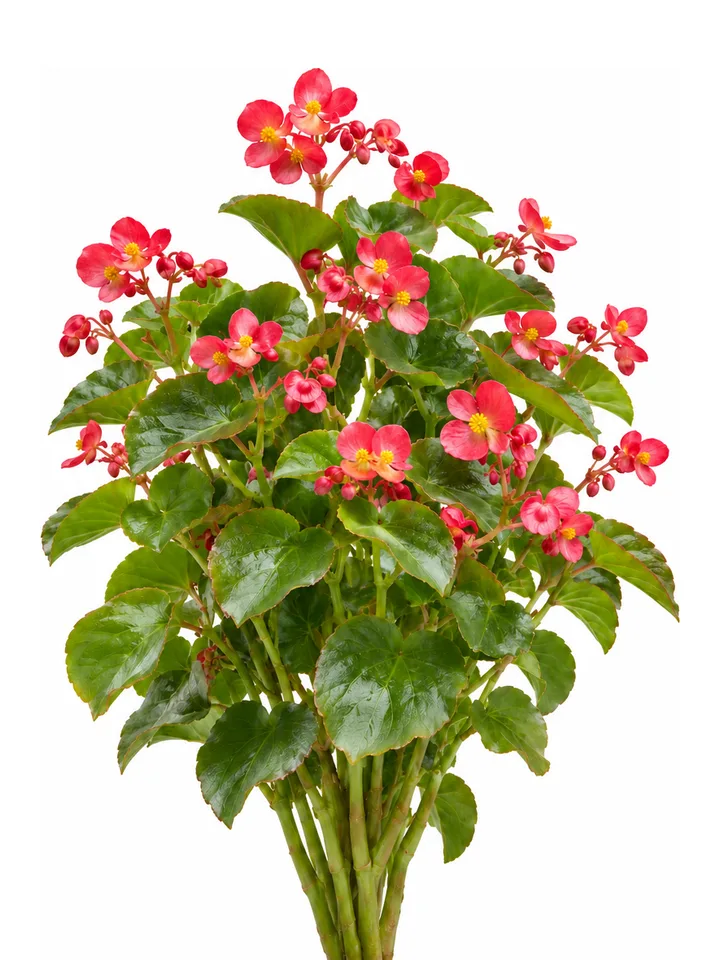
Begonia semperflorens-cultorum
A tender flowering plant valued for colourful flowers and foliage in beds and containers. Wax begonias tolerate bright shade and some sun but prefer sheltered conditions.
Contains calcium oxalates that irritate the mouth of cats and dogs.
When to sow, plant out and harvest in each climate. Plotera turns this into reminders for your own garden, location and planting dates.
| Climate | Sow | Transplant / Plant | Harvest |
|---|
Wax begonia is a compact, tender perennial commonly grown as a seasonal bedding plant. It forms rounded mounds of glossy green or bronze foliage with clusters of white, pink or red flowers. Single and double forms are available, and suitable conditions can support a long flowering season. Its fibrous roots distinguish it from tuberous begonias that need a different approach to winter care. Wax begonias suit beds, window boxes and patio containers, especially in bright shade or gentle morning sun. Some bronze-leaved forms tolerate more sun once established. Moisture, drainage and shelter from harsh conditions help keep the succulent stems and foliage healthy. Plants can be overwintered under protection or renewed from cuttings. Begonias are not a food plant: all parts, especially the roots, contain soluble calcium oxalates that burn the mouth and can cause vomiting, and the plant is toxic to cats, dogs and horses, so keep it away from pets and young children.
Use moderately humus-rich, moist but well-drained soil or potting mix at pH 5.5–6.5. Ground beds suit plants where drainage is reliable; raised beds and containers are useful where soil stays wet.
Separate male and female flowers occur on the same plant; female flowers have a winged ovary beneath them. Pollination is unnecessary for flowering. For seed saving, transfer pollen between fertile male and receptive female flowers; do not assume double forms will supply usable pollen or that hybrid seedlings will match the parent.
Compact wax begonias usually need neither staking nor routine pruning. Trim damaged or excessive growth as needed; container plants can be shortened before overwintering.
Grow from seed or stem, tip and leaf cuttings. Cuttings preserve the characteristics of a selected plant.
Very suitable for pots and window boxes. Use drainage holes, freely draining potting mix and enough space for the mature mound.
Choose bronze-leaved forms for relatively sunnier positions, green-leaved forms for gentler light, and compact forms for small containers. Single flowers make reproductive structures easier to access for seed saving.
Stems soften and plants wilt in wet growing mix. Reduce watering, improve drainage and discard badly affected plants.
Flowers and leaves decay with grey mould. Remove dead flowers and affected tissue, and improve airflow.
White cottony clusters gather around stems and leaf joints. Isolate affected pots and remove small colonies by hand.
Exposed leaves develop bleached or scorched patches. Move plants into gentler light and acclimatise them gradually.
Bright shade and good drainage suit warm conditions; keep plants airy during prolonged rain.
Plants can flower for much of the year where frost is absent; watch for unwanted seedlings.
Protect from harsh afternoon sun and maintain moisture through dry weather.
Use as seasonal bedding after frost danger, or overwinter selected plants indoors.
Wait for warm soil and use a sheltered position; cold conditions restrict growth.
Provide bright shade and monitor containers closely for drying and leaf scorch.
Overall shape, height, branching and growth habit.

Leaf shape, edges, colour and vein pattern.

Flower colour, structure and where blooms appear.

Fruit, root, seed, pod or the strongest identifying feature.
No companion data yet.
No avoid list yet.
Tiny seed is surface-sown or barely covered. Protect from harsh midday sun in hot climates and give good airflow around foliage.
Create a free account to save your garden layout, personal planting calendar, water and fertiliser schedules, seed inventory and harvest logs.
Create Free Account