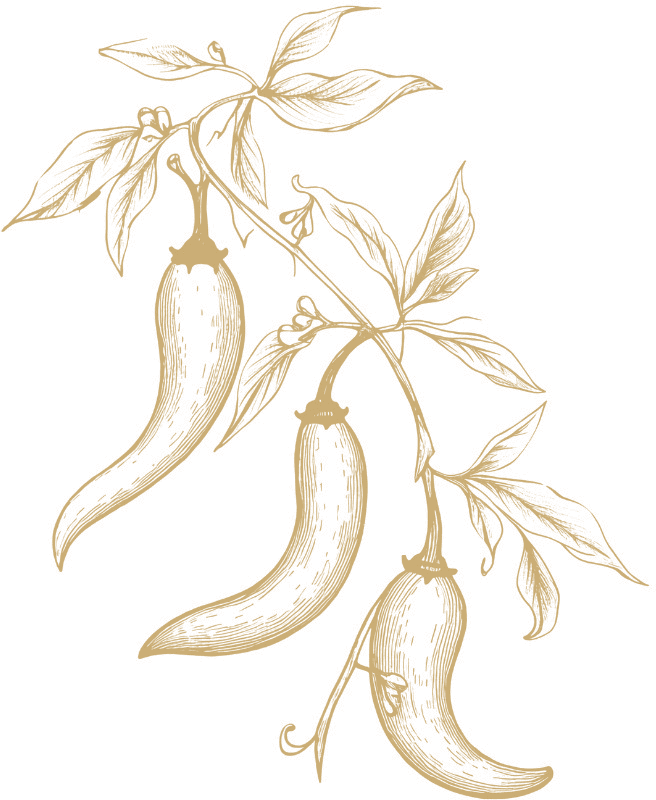

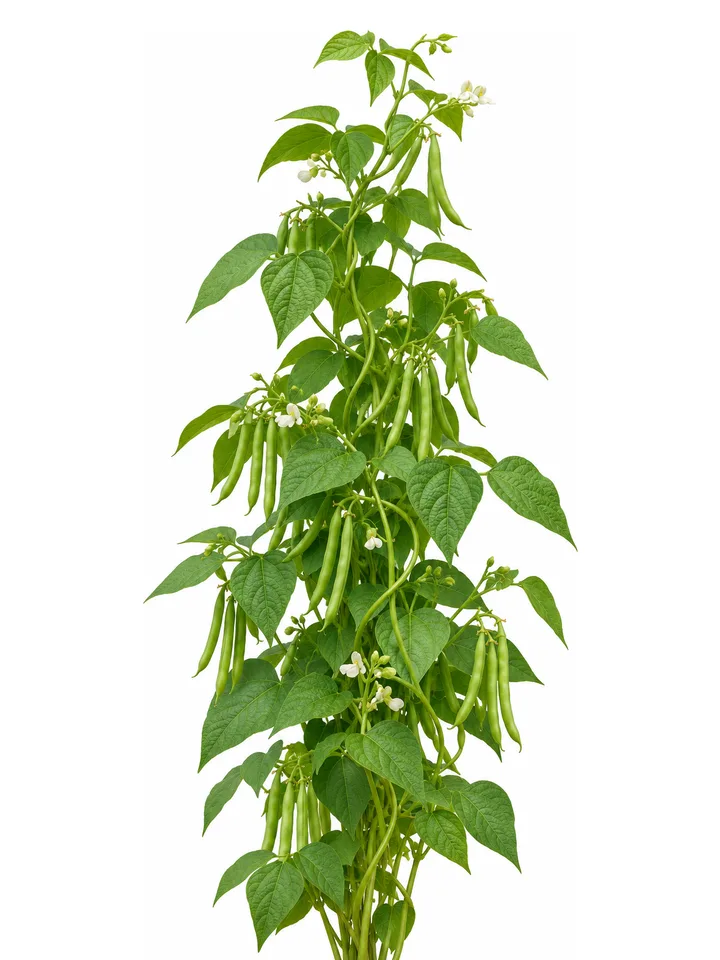
Whole plant
Overall shape, height, branching and growth habit.
Phaseolus vulgaris
A vigorous warm-season bean grown vertically on trellises for a long harvest of tender pods. It differs from runner bean in species and pod characteristics despite a similar climbing habit.
When to sow, plant out and harvest in each climate. Plotera turns this into reminders for your own garden, location and planting dates.
| Climate | Sow | Transplant / Plant | Harvest |
|---|
Climbing bean is the climbing form of Phaseolus vulgaris, grown for tender pods, fresh shelling seeds or dry beans depending on the variety. For repeated tender-pod harvests, choose a climbing snap-bean type. Twining stems use tall supports and can provide a substantial harvest from a relatively small ground area. Plants take longer to begin cropping than compact bush forms but usually produce for longer when picked regularly. They need frost-free weather, warm soil and reliable moisture during flowering and pod growth. Extremely hot conditions can interrupt pod set, but established climbing plants may resume production when conditions improve. Green, yellow, purple and striped pods are available, with round and flat shapes. Harvest timing matters more than pod length alone: tender pods should be picked before seeds bulge strongly and the walls become tough.
Use fertile, well-drained loam enriched with mature compost; pH 6–7 is suitable. Ground beds or raised beds work well. Avoid cold, saturated soil and excessive fertility.
Flowers are perfect and self-fertile, so plants normally set pods without a second variety or hand-pollination. Insects can occasionally cross varieties of the same species. For seed saving, choose an open-pollinated variety and keep it separate from other flowering Phaseolus vulgaris varieties.
Provide supports around 2 m tall or taller according to the variety. Guide shoots initially, then pinch the tips when they reach the top of the support. Routine removal of side shoots is unnecessary.
Grow from seed, either direct sown or started individually under protection and transplanted young. Save fully dry seed from healthy open-pollinated plants.
Use a large container at least 75 cm wide and 45 cm deep for climbing plants, with good drainage and securely anchored supports.
Choose climbing snap types for tender pods, shelling types for fresh seeds or dry-bean types for storage. Early types suit short seasons; disease-resistant and stringless types simplify home production.
Sticky, curled shoots carry clusters of insects. Wash them off and encourage predators; avoid excessive nitrogen.
Leaves become finely speckled and bronzed in hot, dry weather. Maintain moisture and wash leaf undersides.
Water-soaked or brown spots develop on leaves and pods. Use clean seed, avoid handling wet foliage and remove infected debris.
Dark, sunken lesions appear on pods and stems. Use disease-free seed, remove affected plants and rotate the bed.
Flowers fail to set pods during extreme heat. Maintain moisture and allow healthy vines to resume production when temperatures ease.
Choose a milder planting window where persistent heat or humidity limits pod set and increases disease.
Grow during frost-free conditions while avoiding the hottest part of the season for flowering.
Spring sowing after frost works well; provide summer irrigation and mulch.
Sow into warm soil after the last frost and harvest through the frost-free season.
Start individually under protection if needed and choose early climbing types for a short summer.
Irrigate deeply enough to maintain root moisture and watch for spider mites during hot, dusty weather.
Overall shape, height, branching and growth habit.

Leaf shape, edges, colour and vein pattern.

Flower colour, structure and where blooms appear.

Fruit, root, seed, pod or the strongest identifying feature.
A quick garden-to-table guide for using Climbing Bean after harvest.
Do not eat climbing-bean pods or seeds raw or undercooked: they contain a natural lectin (phytohaemagglutinin) that causes severe vomiting and diarrhoea, and dry kidney-type beans contain the most. For salads, boil the pods until fully tender, then cool them.
Steam, boil or stir-fry tender pods. For dried seeds, soak for at least 5 hours, discard the soaking water, then boil hard in fresh water for at least 30 minutes before eating or adding to other dishes; a slow cooker alone does not get hot enough to make them safe.
Blanch and freeze tender pods, or dry mature seeds thoroughly for airtight storage.
No companion data yet.
No avoid list yet.
Provide a trellis before vines begin climbing. Harvest pods young and tender before seeds swell strongly, and pick frequently to prolong production.
Create a free account to save your garden layout, personal planting calendar, water and fertiliser schedules, seed inventory and harvest logs.
Create Free Account