
Whole plant
Overall shape, height, branching and growth habit.
Dianthus spp.
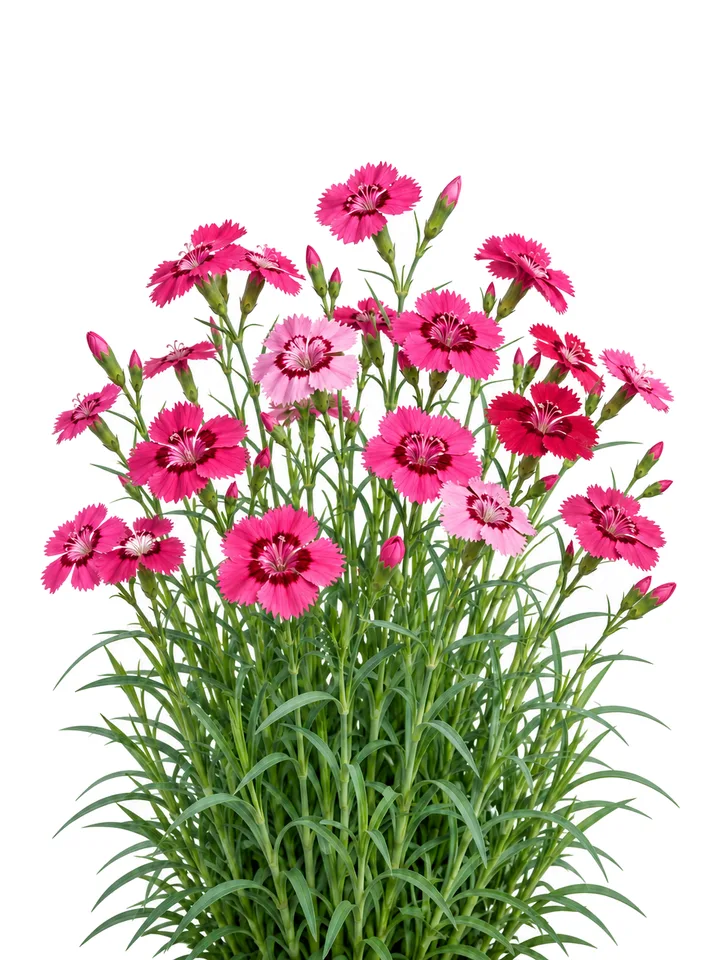
Compact flowering plants with narrow foliage and often fragrant, fringed blooms. Depending on species and cultivar, dianthus may be annual, biennial or short-lived perennial.
When to sow, plant out and harvest in each climate. Plotera turns this into reminders for your own garden, location and planting dates.
| Climate | Sow | Transplant / Plant | Harvest |
|---|
Dianthus includes compact garden pinks, taller carnations and annual or biennial bedding types. Many have fragrant, fringed flowers above narrow green or blue-grey foliage, making them useful for edging, rock gardens, pots and cutting. Their lifespan, height and hardiness depend on the species and variety, so choose a type that suits the intended position. Most flower best in sunshine and need freely draining soil. Established garden pinks can tolerate short dry periods, but wet crowns and winter waterlogging cause trouble. Removing faded flowers can extend the display, and light trimming after a flush helps keep suitable compact forms tidy. Some perennial plants become bare in the centre or decline with age, so renew them from cuttings or division. Petals from flowers grown without chemical sprays can decorate food, but do not eat the leaves, which can cause mild stomach upset and skin irritation. Dianthus is listed as mildly toxic to cats, dogs and horses.
Use freely draining loam with mature organic matter, keeping the crown and lowest leaves above soil level. Most prefer neutral to slightly alkaline soil; carnations and sweet williams have a recommended pH of 6.5–7.0. Use raised beds, troughs or containers where ground stays wet.
Many dianthus flowers contain both male and female parts, and insects visit accessible flowers. Fertility varies among species and hybrids; do not assume double or hybrid forms produce useful seed. Pollination is unnecessary for petal harvest. For seed saving, allow fertile flowers to mature; use cuttings to preserve a named plant.
Low garden pinks usually need no support. Taller carnations benefit from rings or canes. Deadhead to a side shoot and lightly trim compact plants after flowering.
Use seed for suitable annual, biennial and species forms. Take non-flowering shoot cuttings to retain varieties; some clump-forming perennial pinks can also be divided.
Compact pinks suit draining pots and troughs. For a permanent display, choose a container at least 45 cm across and a freely draining potting mix.
Choose low perennial pinks for edging, alpine forms for troughs, bedding types for seasonal colour and taller carnations for cutting. Check hardiness because some carnation groups require frost-free protection.
Plants yellow or collapse, often in wet soil. Keep crowns exposed, improve drainage and remove rotted plants.
Raised coloured pustules develop on leaves or stems. Remove affected material and improve airflow.
Tender growth becomes distorted and sticky. Remove colonies by hand or with a gentle water spray.
Young growth has ragged holes or disappears. Protect small plants and inspect during damp conditions.
Try cool-season bedding types during the coolest period and protect crowns from heavy rain.
Cool-season flowering can be strong, but hot weather may end the display.
Use excellent drainage and water during prolonged drought; severe heat can reduce flowering.
Plant hardy pinks in spring and renew older plants from cuttings.
Choose hardy perennial forms; winter wet can be more damaging than cold.
Water thoroughly when dry and consider light afternoon shade in intense heat.
Overall shape, height, branching and growth habit.

Leaf shape, edges, colour and vein pattern.

Flower colour, structure and where blooms appear.

Fruit, root, seed, pod or the strongest identifying feature.
A quick garden-to-table guide for using Dianthus/Pinks after harvest.
Use clean petals from identified edible dianthus grown for food. Remove the bitter white petal bases and add the coloured portions to salads or desserts.
Use fragrant petals to flavour cake sugar or sweet baking. Do not add leaves or stems.
Crystallise clean petals with sugar for cake decoration. Keep finished decorations dry in an airtight container.
No companion data yet.
No avoid list yet.
Plant into free-draining soil and avoid burying the crown. Deadhead or trim after flowering flushes to encourage compact growth and repeat bloom.
Create a free account to save your garden layout, personal planting calendar, water and fertiliser schedules, seed inventory and harvest logs.
Create Free Account