
Whole plant
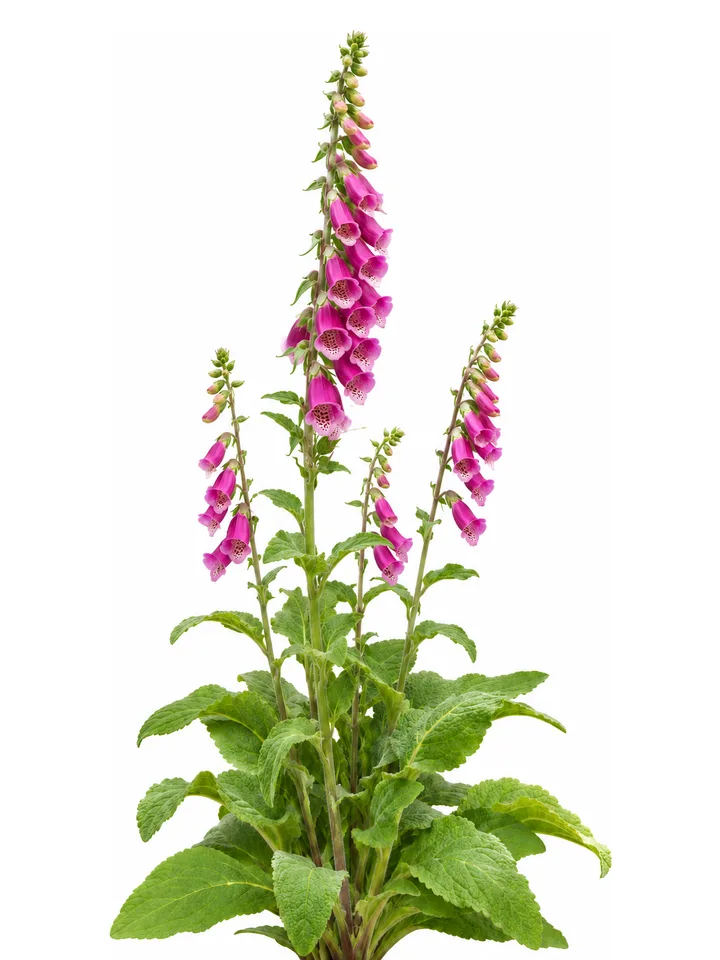
Overall shape, height, branching and growth habit.
Digitalis purpurea
A biennial or short-lived perennial producing tall spikes of tubular flowers. It prefers cool conditions, organic soil and part shade to sun depending on climate.
Contains cardiac glycosides that affect the heart. Even small amounts can be dangerous. Wear gloves and wash hands after handling.
When to sow, plant out and harvest in each climate. Plotera turns this into reminders for your own garden, location and planting dates.
| Climate | Sow | Transplant / Plant | Harvest |
|---|
Common foxglove usually grows as a biennial, forming a leafy rosette first and a tall flowering spike in its second growing season. The tubular flowers open along the spike and bring height to woodland-style planting, informal borders and lightly shaded gardens. Bumblebees visit the nectar-rich bells. Plants may sometimes behave as short-lived perennials, but a continuing display is most reliably maintained by raising new plants or allowing some self-seeding. Give each rosette enough space: crowding can delay flowering. Moist, organically enriched soil and light shade suit it well, particularly where summer sunshine is strong. The tiny seeds need light and should be pressed onto the surface rather than buried. Every part is highly poisonous to people, pets and livestock: it contains cardiac glycosides, and even small amounts eaten can affect the heart. Never use any part as food or tea, keep plants and seeds away from young children and animals, grow it well apart from edible crops so leaves cannot be mixed into harvests, and wear gloves when handling plants and seeds.
Use humus-rich, moisture-retentive but freely draining loam. Acidic to neutral soil, roughly pH 5.5–7.0, suits common foxglove. Ground planting is suitable where roots stay moist without waterlogging; enrich sandy soil with mature organic matter.
The tubular flowers contain male and female parts and are visited especially by bumblebees. Pollination matters for seed production, not the ornamental display. Do not rely on saved seed to reproduce a named variety exactly; allow selected spikes to ripen or use fresh seed of the desired strain.
Shelter tall spikes and stake if they lean in exposed conditions. Remove spent spikes unless seed is wanted; leave healthy rosette foliage in place.
Seed is the normal method for Digitalis purpurea. Surface sowing and self-seeding are effective; do not assume propagation advice for perennial foxglove species applies to this biennial.
Use a sheltered position in light shade and a large, draining container at least 45 cm across. Fill with moisture-retentive, loam-based potting mix.
Choose compact strains for containers, traditional biennial strains for naturalising and specifically described first-year-flowering strains when a quicker display is needed.
Small seedlings are eaten or develop ragged holes. Keep young plants in protected pots until more robust.
Colonies gather on developing spikes. Wash them off gently without bending or damaging the stem.
White powder develops on leaves. Improve airflow and prevent drought stress; plants often recover without treatment.
Leaves wilt and flowering is reduced. Water the root zone and provide light afternoon shade in hot conditions.
Try only during the coolest conditions, with light shade and excellent drainage; reliable biennial performance may be difficult.
Provide afternoon shade and consistent moisture during the mild growing period.
Use dappled shade and summer irrigation to prevent drought-limited flowering.
Sow for a succession of rosettes and leave selected plants to self-seed.
Common foxglove is hardy, but protect small seedlings from slugs and wet winter conditions.
Choose a sheltered, lightly shaded position and maintain root moisture; exposed dry sites are unsuitable.
Overall shape, height, branching and growth habit.

Leaf shape, edges, colour and vein pattern.

Flower colour, structure and where blooms appear.

Fruit, root, seed, pod or the strongest identifying feature.
No companion data yet.
No avoid list yet.
Surface-sow the fine seed because light helps germination. Allow some flower spikes to set seed if natural self-sowing is wanted.
Create a free account to save your garden layout, personal planting calendar, water and fertiliser schedules, seed inventory and harvest logs.
Create Free Account