Features Guides Plant Encyclopedia Planting Calendar Demo Pricing News About FAQ Contact InstagramFacebook Sign In
House plant

Pink Princess Philodendron care guide

Philodendron erubescens 'Pink Princess'

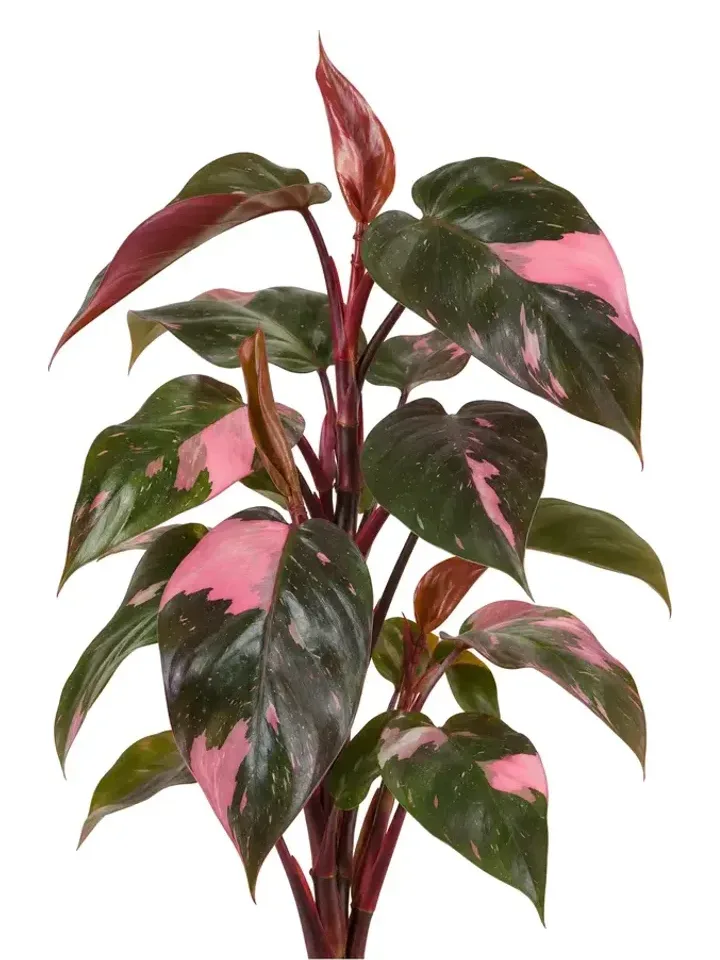
Pink Princess is a climbing Philodendron erubescens cultivar with burgundy-green leaves irregularly splashed or sector-marked in pink, carried on reddish stems and petioles. It is grown as a collector foliage plant, with every leaf producing a different pattern when light and growth are balanced.

Bright, indirect lightWater about every 8 daysClimberModerate to keepToxic to cats and dogs
Pink Princess Philodendron, a house plant
Bright, indirect lightLight
About every 8 daysWater
Top 2 cm dryWater when
Every 4 weeks in growthFeed
ModerateHumidity
18-28 °CTemperature
Every 2-3 yearsRepot
ModerateDifficulty

How to look after Pink Princess Philodendron

☀️ Light

Bright, indirect light. Close to a bright window, out of hot direct sun.

Give Pink Princess Philodendron (Philodendron erubescens 'Pink Princess') an east window or bright filtered light one metre back from north glass; the burgundy climbing stem and variegated blade records low light as smaller, plainer growth.

In numbers: about 6-12 mol/m²/day of light (DLI). Plotera's light check measures a spot with your phone and tells you if it is enough.

💧 Water

About every 8 days in the growing season, every 13 days or so in winter: water when the top 2 cm of mix is dry.

Water slowly until the whole root ball drains, wait ten minutes, then empty the cover pot or saucer.

Too much: Philodendron erubescens's burgundy climbing stem and variegated blade yellows from the lowest leaf upward, while the petiole base softens and a dark wet patch advances from the node.

Too little: Philodendron erubescens's burgundy climbing stem and variegated blade folds along its midrib and hangs from a still-firm petiole; a thorough soak restores posture before crisp brown margins expand.

🌱 Feeding

Half-strength balanced feed every 4 weeks while it is growing, none in winter.

Never feed a dry or dormant root ball; water first and stop when growth pauses from May through August.

Too much: Philodendron erubescens's burgundy climbing stem and variegated blade shows crisp tips and stalled new growth despite moist soil; white deposits on the mix or rim point to accumulated fertiliser salts.

🪴 Pot, air and warmth

Happiest at 18-28 °C, and not below 15 °C. Moderate humidity.

A pot at least 24 cm across, with drainage holes. Repot every 2-3 years, best in spring.

Grows to about 80 cm across indoors.

Common problems

⚠️New leaves are mostly greenlight is too low or the stem has reverted▾

increase indirect light and prune back to a node with pink patterning

⚠️Pink sections turn brownpale tissue is scorched, dry or physically damaged▾

avoid direct sun and keep moisture and humidity steady

⚠️Leaves yellow and roots darkenthe mix stays wet▾

let the surface dry and repot into an airy mix

⚠️New leaves stick or tear while openingair is dry or moisture fluctuates▾

raise humidity moderately and water more consistently

⚠️Fine webbing or cottony clustersmites or mealybugs are feeding▾

isolate, rinse and wipe the plant repeatedly

In the Plotera app

Put your pink princess philodendron in a 3D room.

Add it to a room in Plotera and it sits on your window sill or plant shelf in 3D, in a pot you choose. It reminds you when to water and feed it, the light check tells you if its spot is bright enough, and you can use a photo of your own plant.

A window sill of house plants in Plotera's 3D room view

Turn garden notes into a living plan.

Create a free account to save your garden layout, personal planting calendar, water and fertiliser schedules, seed inventory and harvest logs.

Create Free Account
Get it onGoogle PlayDownload on theApp Store
Use Plotera like an app from your home screen.

Get Plotera on Google Play

Open Plotera on Google Play.
Tap Install to add the Android app.
Sign in or create your free Plotera account.
Open Google Play
Plotera is available on Google Play for Android devices.