
Whole plant
Overall shape, height, branching and growth habit.
Portulaca grandiflora
A low-growing succulent annual that thrives in hot, sunny and dry positions. Bright flowers open best with strong light and well-drained soil.
When to sow, plant out and harvest in each climate. Plotera turns this into reminders for your own garden, location and planting dates.
| Climate | Sow | Transplant / Plant | Harvest |
|---|
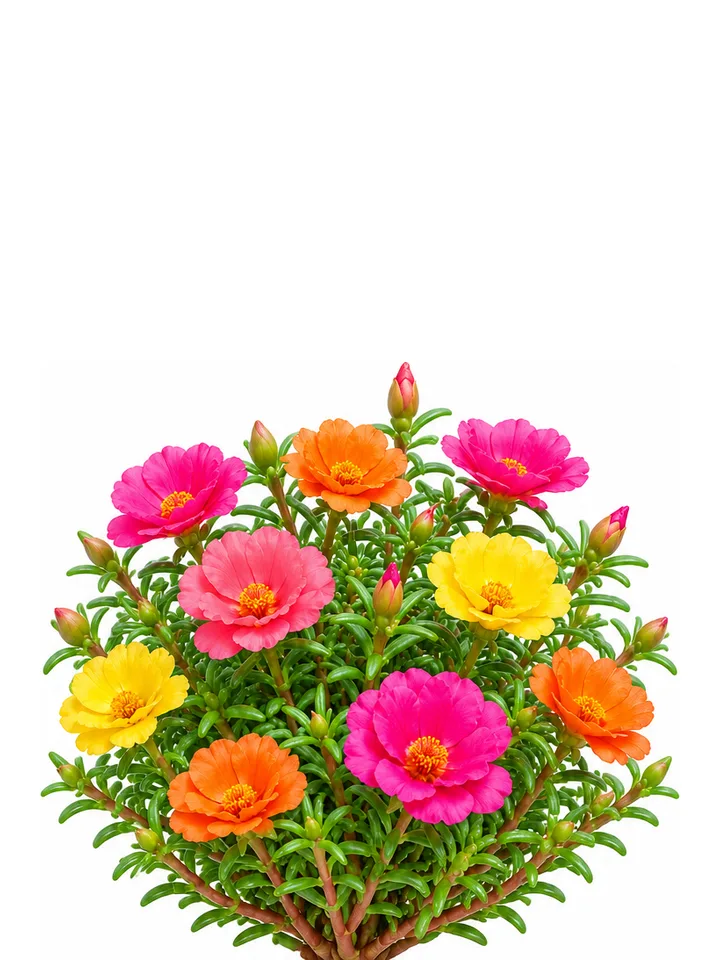
Moss rose is a low, spreading succulent grown for bright flowers and its ability to cope with hot, sunny conditions. Its narrow fleshy leaves and reddish stems store water, making established plants more forgiving of missed watering than many bedding flowers. The flowers sit above the foliage and may be single, semi-double or double. They usually open in sunshine and close at night or during dull weather, although some garden hybrids remain open longer. Plants work well along sunny edges, between rocks, over walls and around the rims of containers. Expect a spreading mat rather than an upright shrub, with flowering through the warm season. Frost ends the display in cold climates. Excellent drainage is essential: tolerance of dry weather does not mean tolerance of wet roots. Seed-grown plants may reseed, while cuttings are useful for retaining selected forms. Grow moss rose as an ornamental, not as food. It is a different plant from purslane (Portulaca oleracea), the leafy salad vegetable, although some moss-rose types are sold under that name, so do not treat it as a salad crop. Purslane, also sold as moss rose, is listed as toxic to cats, dogs and horses, so keep pets from chewing the plants.
Use freely drained sandy, gravelly or rocky soil. Lean ground is suitable; modest organic matter can improve moisture retention without making the root zone soggy. It tolerates acidic, neutral and alkaline soils. Raised beds and draining pots suit wet sites.
Single flowers have both male and female organs. The species can self-pollinate, but bee-mediated cross-pollination can improve seed production. Flowering does not depend on pollination. Hybrid and double forms may differ in fertility; use cuttings when you need identical plants.
No staking or trellis is needed. Light pinching or a midseason trim can encourage fuller growth; deadheading helps reduce reseeding.
Propagate by seed or healthy stem cuttings. Some garden hybrids are maintained through cuttings rather than seed.
Use a draining container with about 20 cm of potting-mix depth. Choose a sunny position and leave room for stems to spill over the edge.
Look for compact mounds for edging, trailing forms for baskets, and types selected to keep flowers open longer. Single flowers give pollinators easier access.
Stems soften or plants collapse in wet soil. Reduce watering, improve drainage and remove rotten plants.
Small colonies distort new shoots and leave sticky deposits. Rub off colonies while protecting the brittle stems.
Tender growth develops irregular holes or disappears overnight. Inspect after dark and remove slugs feeding on plants.
Seedlings collapse at soil level. Sow thinly in clean seed mix and improve ventilation without letting the seedbed dry completely.
Provide full sun and especially sharp drainage during rainy periods.
Grow through warm frost-free weather; avoid low spots that remain wet after storms.
Well suited to sunny, dry summers once established; containers still need moisture checks.
Treat as a warm-season annual and plant out after frost danger.
Start under cover and use the warmest sunny site; cool, cloudy conditions reduce the display.
Heat tolerance is useful, but occasional thorough watering supports flowering during prolonged dry conditions.
Overall shape, height, branching and growth habit.

Leaf shape, edges, colour and vein pattern.

Flower colour, structure and where blooms appear.

Fruit, root, seed, pod or the strongest identifying feature.
No companion data yet.
No avoid list yet.
Ideal for hot exposed beds, rockeries and containers. Its succulent stems make it much more tolerant of missed watering than most bedding flowers.
Create a free account to save your garden layout, personal planting calendar, water and fertiliser schedules, seed inventory and harvest logs.
Create Free Account