
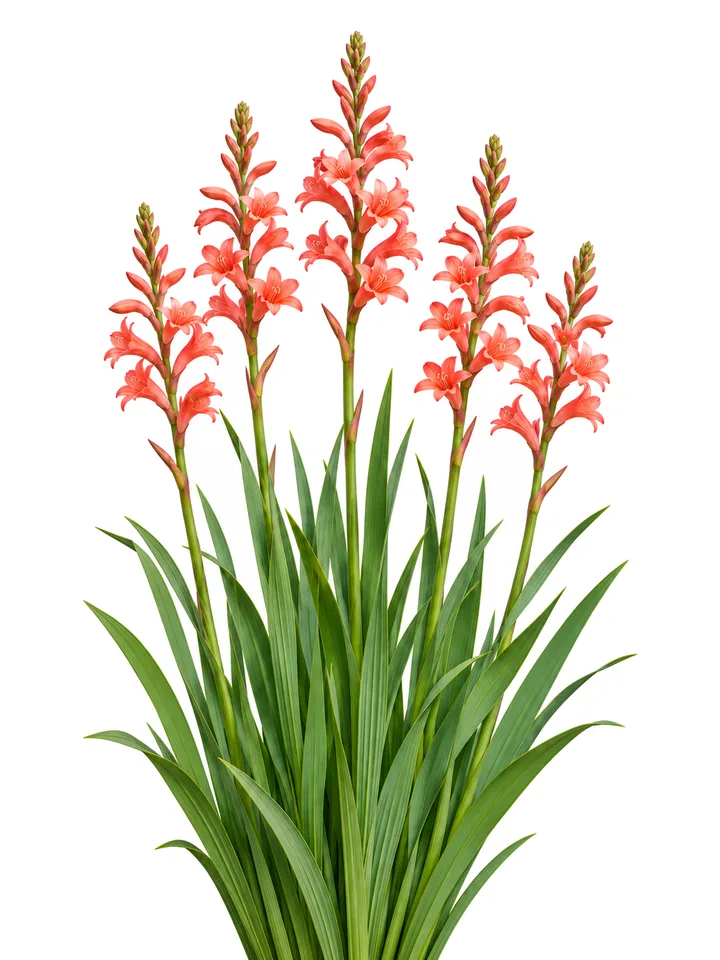
Whole plant
Overall shape, height, branching and growth habit.
Watsonia spp.
A corm-forming perennial native to southern Africa, with sword-like leaves and tall spikes of tubular flowers for sunny, well-drained positions. Some forms spread and are weeds in many regions: check local rules before planting.
When to sow, plant out and harvest in each climate. Plotera turns this into reminders for your own garden, location and planting dates.
| Climate | Sow | Transplant / Plant | Harvest |
|---|
Watsonias are corm-forming perennials with fans of tough, sword-shaped leaves and tall spikes of tubular flowers. Native to southern Africa, they can make striking clumps in sunny borders and provide useful cut flowers. Flower colours include pink, orange, red and white, depending on the species or hybrid. The name covers plants with different growing cycles and winter tolerances, so identify your plant before deciding when to water or protect it. Many commonly grown forms suit mild conditions and need shelter from severe frost. Good drainage is essential because saturated soil can rot the corms. Allow green leaves to remain after flowering so they can replenish the underground storage organ. Clumps need occasional division when crowding reduces flowering. Several watsonias, especially bulbil-forming types, have escaped gardens and become weeds in many regions, so check local rules before planting and prevent garden escape. Grow it as an ornamental, not a food plant, and wear gloves when handling it because it can irritate skin or cause allergic reactions.
Choose light, free-draining sandy soil or loam containing well-rotted organic matter. Containers or raised beds help where drainage is poor. Soil reaction varies with species; commonly grown W. borbonica accepts acidic, neutral and alkaline conditions.
Flowers have both stamens and a female style. Pollination and reliable seed production depend on the species or hybrid, so do not assume every watsonia is self-fertile. Pollination is unnecessary for producing cut flowers. Divide corm offsets to retain a selected plant; bulbil-producing forms can multiply without seed.
Stake tall flower spikes if needed. Cut off spent flowering stems, then allow leaves to die naturally before removing them; cutting green foliage prematurely weakens the next growth cycle.
Propagate by seed or by separating corm offsets. Division retains the parent plant's characteristics. Some forms also produce aerial bulbils, which require careful handling to prevent spread.
Suitable for substantial containers with free-draining, loam-based potting mix. Choose a stable pot for tall growth and divide crowded clumps rather than allowing corms to pack tightly together.
Choose a named species or hybrid with a known growth cycle and mature size. W. borbonica offers tall pink or white flowers; avoid bulbil-producing forms where escape is a concern.
Growth fails or yellows and corms become soft or decayed. Discard affected corms and improve drainage before replanting sound material.
Small insects gather on shoots or flowering stems. Minor colonies may cause little damage; wash off troublesome infestations and preserve natural predators.
An established clump produces dense leaves but fewer flower spikes. Lift and divide during dormancy, then replant healthy offsets with room to grow.
New clumps or bulbils appear beyond the planting. Collect reproductive material and remove escaped corms; do not move contaminated soil.
Check the exact species before planting; provide excellent drainage and match watering to its active growth rather than keeping it permanently wet.
Use a sunny, sheltered position and protect susceptible forms from frost.
Winter-growing forms can suit the seasonal pattern; reduce watering when their leaves die and dormancy begins.
Choose a warm, sheltered site and protect corms from severe cold and winter wet.
Grow in containers under protection or lift suitable dormant corms before damaging cold.
Provide water during active growth, then reduce it during dormancy according to the species.
Overall shape, height, branching and growth habit.

Leaf shape, edges, colour and vein pattern.

Flower colour, structure and where blooms appear.

Fruit, root, seed, pod or the strongest identifying feature.
No companion data yet.
No avoid list yet.
Plant corms in free-draining soil and allow foliage to die back naturally after flowering so the corm can recharge.
Create a free account to save your garden layout, personal planting calendar, water and fertiliser schedules, seed inventory and harvest logs.
Create Free Account