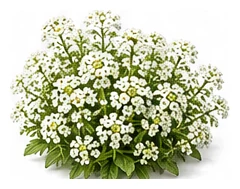
Whole plant
Overall shape, height, branching and growth habit.
Lobularia maritima
Low-growing annual or short-lived perennial covered in tiny honey-scented flowers. Good edging and ground cover that attracts beneficial insects such as hoverflies. May self-sow, though seedlings often differ from the parent.
When to sow, plant out and harvest in each climate. Plotera turns this into reminders for your own garden, location and planting dates.
| Climate | Sow | Transplant / Plant | Harvest |
|---|---|---|---|
| Tropical | Apr - Aug | Apr - Aug | Jan - Dec |
| Subtropical | Feb - Sep | Feb - Sep | Jan - Dec |
| Mediterranean | Feb - Oct | Feb - Oct | Jan - Dec |
| Temperate | Mar - Oct | Mar - Oct | Jan - Dec |
| Cool | Mar - Sep | Mar - Sep | Jan - Dec |
| Arid | Mar - Sep | Mar - Sep | Jan - Dec |
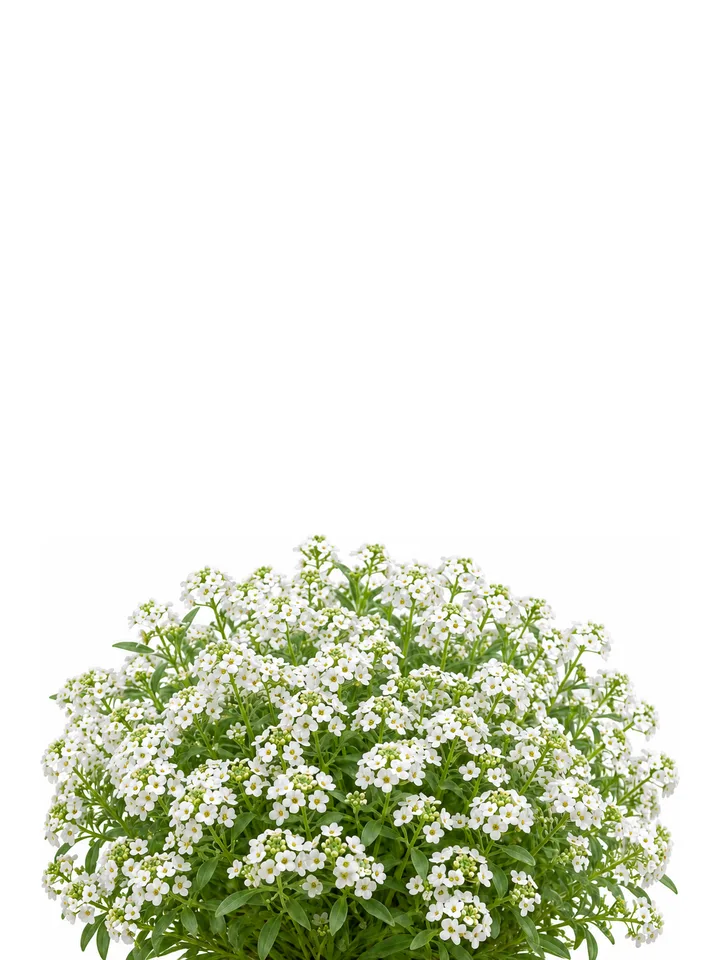
Sweet alyssum is a low, spreading annual or short-lived perennial that produces masses of small, honey-scented flowers. It is useful along paths, between larger plants and spilling over container edges. White forms are particularly fragrant, while other varieties provide pink, lavender and purple flowers. The accessible flowers attract hoverflies and other beneficial insects as well as bees. It usually gives its best display in cool to mild weather; older seed-grown forms often slow down in summer heat. Newer hybrids can maintain flowering better in warmth, although some need more water and spread much farther. Plants may self-sow, but replacement seedlings do not necessarily keep the original colour or compact habit. Light trimming can refresh leggy plants and encourage another flush when growing conditions improve.
Use average, well-drained soil with moderate moisture and some organic matter. Slightly acidic to neutral soil is suitable. Ground beds and containers both work; improve drainage before planting in heavy, wet ground.
Small four-petalled flowers attract bees, hoverflies and other insects. Pollination is unnecessary for the flower display. Seed-grown forms can reseed, but do not assume self-fertility or that offspring will remain true to type; some vigorous hybrids are sterile.
No staking or trellis is needed. Shear overgrown plants after the main flush, retaining healthy leafy growth; time this to plant condition rather than automatically cutting every plant by half.
Raise ordinary forms from seed or transplant small self-sown seedlings. Seedlings can vary; sterile hybrids require vegetative propagation.
Suitable for pots, hanging baskets and planter edges. Allow for the chosen variety's mature spread, which can vary greatly.
Choose compact seed-grown types for edging, white forms for strong fragrance, and heat-tolerant hybrids for longer warm-weather flowering. Check spread and fertility before choosing a hybrid for containers or seed saving.
Dense growth browns and collapses, especially in wet or crowded conditions. Improve drainage and thin crowded plants.
Discoloured leaves may develop downy growth beneath. Remove affected growth, improve airflow and avoid prolonged leaf wetness.
Flowering slows and plants become sparse during hot, dry weather. Check moisture, provide afternoon shade and trim when conditions improve.
Use during the mildest growing conditions and give afternoon shade; persistent heat can reduce flowering.
Cool-season planting usually gives a better display than peak summer heat.
Make use of the cooler growing season and water through dry spells.
Grow from spring into autumn, refreshing plants when summer flowering declines.
A sunny position and established transplants help maximise a short growing season.
Provide afternoon shade and consistent root-zone moisture; newer vigorous hybrids may need more water.
Overall shape, height, branching and growth habit.
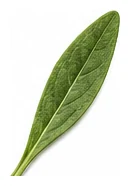
Leaf shape, edges, colour and vein pattern.
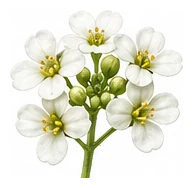
Flower colour, structure and where blooms appear.
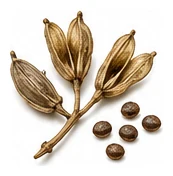
Fruit, root, seed, pod or the strongest identifying feature.
Create a free account to save your garden layout, personal planting calendar, water and fertiliser schedules, seed inventory and harvest logs.
Create Free Account