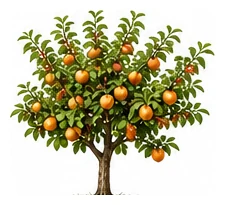
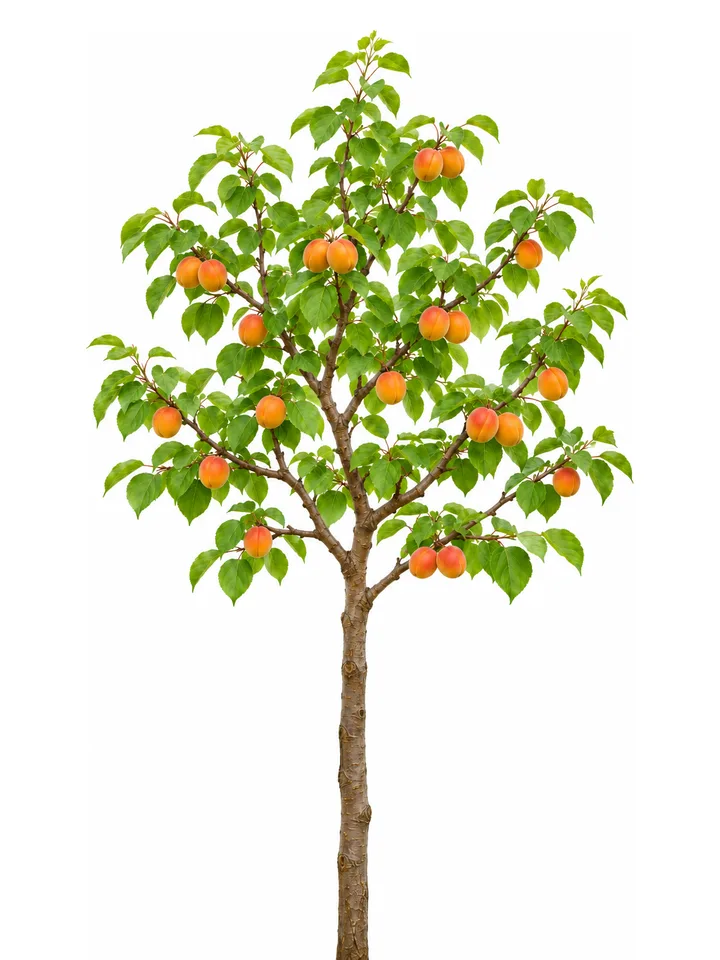
Whole plant
Overall shape, height, branching and growth habit.
Prunus armeniaca
Early-flowering stone fruit for dry temperate climates. Needs good drainage and frost-aware siting.
Raw apricot kernels can cause cyanide poisoning. Food Standards Australia New Zealand warns against eating them.
When to sow, plant out and harvest in each climate. Plotera turns this into reminders for your own garden, location and planting dates.
| Climate | Sow | Transplant / Plant | Harvest |
|---|---|---|---|
| Tropical | From transplant | Jan - Dec | Jan - Dec |
| Subtropical | From transplant | Mar - Sep | Jan - Dec |
| Mediterranean | From transplant | Mar - May | Jun - Nov |
| Temperate | From transplant | Mar - May | Jun - Oct |
| Cool | From transplant | Mar - May | Jul - Oct |
| Arid | From transplant | Mar - May | Jun - Nov |
Apricot is a deciduous stone-fruit tree valued for spring blossom and soft, fragrant fruit that is especially rewarding when allowed to ripen close to harvest. It needs a sunny, sheltered position and well-drained soil. The main difficulty is its early flowering: the tree itself may survive winter well, while a late frost destroys the blossom and prevents a crop. Choose a variety suited to local winter chilling and, where possible, one that flowers relatively late. A compact tree or trained fan is easier to protect than a large free-standing tree. Many varieties can crop alone, although some need a compatible partner. Expect to thin heavy fruit sets, maintain an open framework and harvest as fruit develops its characteristic colour and begins to soften. Cropping can be irregular where spring frosts are frequent.
Use deep, fertile, well-drained loam with organic matter and good moisture retention. A pH of 6.0–7.5 is a suitable general fruit-tree range, but alkaline, wet soils increase chlorosis risk. Avoid heavy, waterlogged ground; use a broad raised planting area or a container where drainage is inadequate.
Flowers have male and female parts together. Many varieties are self-fertile, but compatible cross-pollination can improve cropping; some cold-hardy varieties are self-unfruitful and need a partner. Bees transfer pollen. During poor insect activity or protected cultivation, dab a soft brush between open flowers over several dry days.
Stake young free-standing trees and provide wires for fan-trained trees. Prune in dry spring or summer weather, opening crowded growth for airflow; established trees are usually pruned after fruiting. Avoid wet-season or dormant pruning where canker infections are a concern.
Use grafted or budded trees to retain the variety and rootstock characteristics. Seed can grow, but does not reliably reproduce the parent or its cropping behaviour.
Choose a compact tree and a pot at least 45 cm in diameter, with drainage holes and a loam-based potting mix. Expect regular watering, feeding and periodic repotting.
Look for later-flowering types where spring frost is common, low-chill types only where locally proven, and naturally compact forms for pots. Check self-fertility because some very hardy types require a compatible partner.
Flowers brown or fruit fails to set after freezing weather. Avoid frost pockets, choose later-flowering types and protect manageable trees overnight.
Fruit develops spreading brown decay and may remain as dried mummies. Remove affected fruit, clear old mummies and prune for airflow.
Branches die back around sunken or gummy bark lesions. Remove affected growth in suitable dry growing-season weather and avoid pruning during wet conditions.
Leaves yellow between greener veins, especially on alkaline or overwatered sites. Check drainage and pH before adding nutrients, and use an appropriate iron treatment only when diagnosed.
Warm lowland conditions usually provide insufficient winter chilling. Attempt only where a locally proven variety receives adequate chilling.
Use a locally proven low-chill variety, while recognising that early blossom remains vulnerable to cold snaps.
Sunny conditions favour ripening, but provide water during fruit swelling and prune during dry weather.
Choose a sheltered position with good air drainage. Blossom protection can determine whether a crop survives.
Choose hardy, later-flowering types and consider a protected fan or greenhouse. Tree survival does not guarantee annual fruiting.
Provide deep irrigation without waterlogging and check alkaline soil for chlorosis risk.
Overall shape, height, branching and growth habit.
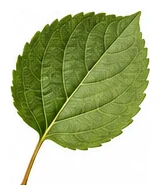
Leaf shape, edges, colour and vein pattern.
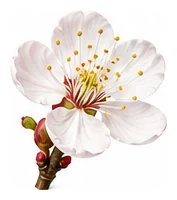
Flower colour, structure and where blooms appear.
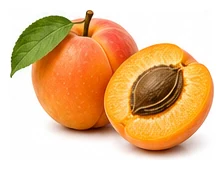
Fruit, root, seed, pod or the strongest identifying feature.
A quick garden-to-table guide for using Apricot after harvest.
Eat ripe, washed flesh fresh, removing the stone. Never eat the kernel inside the stone: raw apricot kernels can release cyanide and cause poisoning.
Poach, bake or stew the pitted flesh for desserts and sauces.
Freeze pitted halves using a tested preparation method, or dry the flesh. Use tested recipes for shelf-stable jam or canned fruit.
Try: Fresh fruit, Poached apricots, Dried apricots, Jam.
Create a free account to save your garden layout, personal planting calendar, water and fertiliser schedules, seed inventory and harvest logs.
Create Free Account