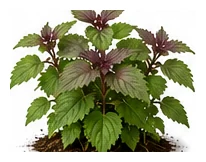
Whole plant
Overall shape, height, branching and growth habit.
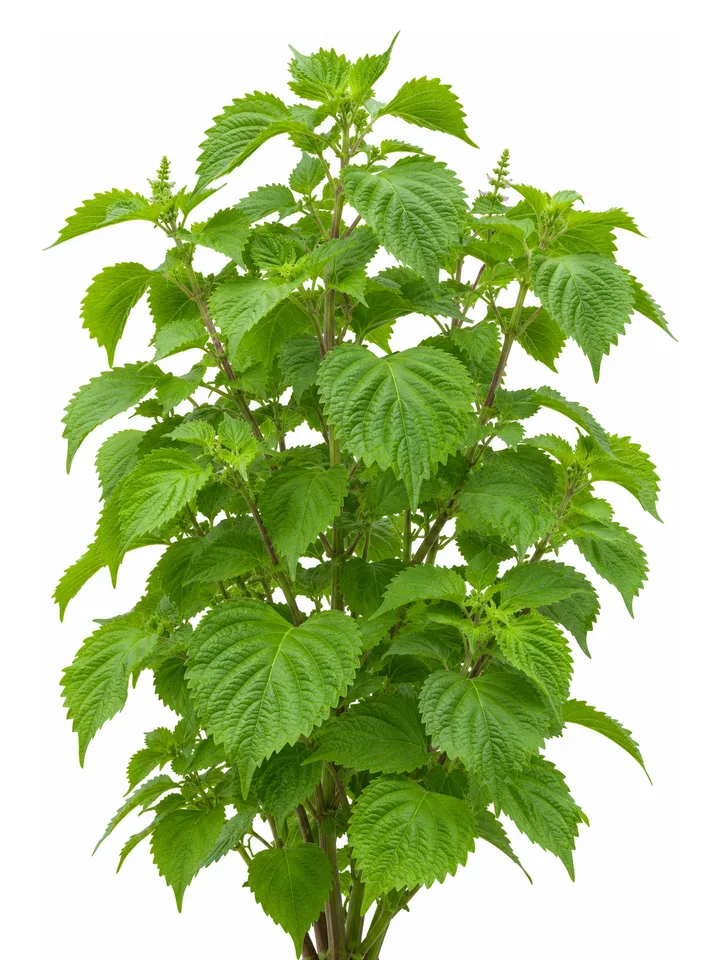
Perilla frutescens
Fragrant Asian herb with green or purple leaves used fresh, pickled or as garnish. Thrives in warm weather.
Perilla is toxic to grazing livestock eaten in quantity. Stop it self-seeding into pasture.
When to sow, plant out and harvest in each climate. Plotera turns this into reminders for your own garden, location and planting dates.
| Climate | Sow | Transplant / Plant | Harvest |
|---|---|---|---|
| Tropical | Jan - Dec | Jan - Dec | Jan - Dec |
| Subtropical | Jul - Oct | Sep - Dec | Nov - May |
| Mediterranean | Aug - Oct | Oct - Dec | Dec - Apr |
| Temperate | Mar - May | May - Jun | Jul - Oct |
| Cool | Apr - May | Jun | Aug - Oct |
| Arid | Jul - Sep | Sep - Oct | Nov - Mar |
Shiso is a fast-growing aromatic annual valued for its colourful, toothed leaves and distinctive flavour. Green and purple-leaved forms can be grown for both kitchen use and ornamental effect, and the plant fits into beds, borders and containers. It grows in full sun or partial shade and tolerates warm conditions well. Regular picking helps keep plants manageable and provides tender leaves over the growing season. The main long-term concern is its ability to escape through abundant self-sown seed: remove flower spikes before seed ripens unless you deliberately want to collect it. Plants allowed to mature can become substantially larger than a frequently harvested kitchen specimen. Choose a culinary form and manage it actively, especially near uncultivated ground. Keep plants and discarded growth away from grazing livestock, because perilla can be poisonous to them.
Use loose, well-drained soil with organic matter and enough moisture for leafy growth. It tolerates a range of garden soils. Beds and containers both work; avoid leaving the root zone saturated.
Pollination is unnecessary for leaf harvests. Perilla is self-pollinating and can produce abundant seed without a second plant. For seed saving, retain selected flower spikes and collect ripe seed before it scatters; remove the remaining spikes to limit unwanted seedlings.
No trellis is normally needed. Pinch or harvest shoot tips to control height and encourage branching. Remove flower spikes before seed formation to reduce spread.
Seed is the usual method. Plants self-sow readily when flower spikes are left to mature.
Use a pot at least 30 cm across, with drainage holes and a freely draining potting mix. Regular harvesting helps control the size of vigorous plants.
Look for culinary green-leaved, purple-leaved or bicoloured forms. Select for the leaf colour and flavour you want rather than assuming every ornamental perilla has the same kitchen qualities.
Numerous seedlings appear around the planting. Remove flower spikes before seeds ripen and pull seedlings before they establish.
Growth weakens or wilts while the potting mix remains saturated. Clear drainage holes and let excess moisture drain before watering again.
Small colonies can gather on soft shoot tips. Inspect container plants regularly, remove colonies physically and retain natural predators.
Warm conditions suit growth, but keep roots drained during prolonged rain and remove seed heads promptly.
Use sun or partial shade and harvest regularly to contain vigorous growth.
Provide water during dry spells; partial shade can help reduce container drying.
Grow during the frost-free season and remove unwanted seedlings in following seasons.
Start in protected conditions and use a warm, sheltered position once frost risk passes.
Use partial shade and regular moisture for usable leaves, checking pots frequently in drying weather.
Overall shape, height, branching and growth habit.
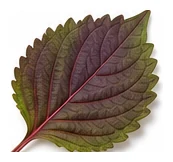
Leaf shape, edges, colour and vein pattern.
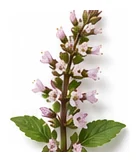
Flower colour, structure and where blooms appear.
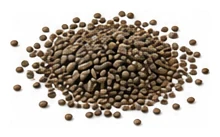
Fruit, root, seed, pod or the strongest identifying feature.
A quick garden-to-table guide for using Shiso after harvest.
Use washed young shiso leaves in salads, as a garnish or as an aromatic wrap.
Use leaves to flavour cooked dishes, adding them in modest amounts to suit their strong aroma.
Freeze clean leaves for later cooked use. For pickled shiso, follow a tested recipe and its refrigeration instructions.
Try: Leaf salad, Garnish, Leaf wraps, Pickled leaves.
Create a free account to save your garden layout, personal planting calendar, water and fertiliser schedules, seed inventory and harvest logs.
Create Free Account