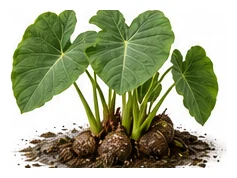
Whole plant
Overall shape, height, branching and growth habit.
Colocasia esculenta
Tropical root crop grown for starchy corms and edible leaves where properly prepared. Loves warmth, rich soil and moisture.
Contains calcium oxalate crystals that burn the mouth and throat. Always cook thoroughly before eating.
When to sow, plant out and harvest in each climate. Plotera turns this into reminders for your own garden, location and planting dates.
| Climate | Sow | Transplant / Plant | Harvest |
|---|---|---|---|
| Tropical | Jan - Dec | Jan - Dec | Jan - Dec |
| Subtropical | Sep - Dec | Sep - Dec | Jan - Dec |
| Mediterranean | Sep - Nov | Nov - Dec | Jan - Dec |
| Temperate | Mar - May | May - Jun | Jul - Oct |
| Cool | Apr - May | Jun | Aug - Oct |
| Arid | Sep - Nov | Sep - Nov | Jan - Dec |
Taro is a large, leafy tropical perennial grown for its starchy underground corms and, in suitable edible varieties, young leaves. Its broad leaves give a garden a lush appearance, but the plant needs considerable space and a long period of warmth to produce well. Different varieties suit different growing systems: some tolerate flooded conditions, while others are better maintained in moist, drained soil. For a home garden, a dedicated bed with fertile soil and dependable irrigation is usually the most manageable approach. Expect growth to slow in cool conditions and allow several months for corm development. Start only with positively identified edible planting material. Neither corms nor leaves should be eaten raw, and thorough preparation and cooking remain essential even when the plant is an established food variety.
For upland growing, choose deep, friable, organically enriched loam with pH 5.5–6.5. Maintain moisture while allowing drainage. Use beds or ground suited to the variety; do not assume every edible taro tolerates prolonged flooding.
Pollination is unnecessary for corm or leaf harvests. Separate male and female flowers occur on the same flower spike. Flowering and fertility vary between varieties, making seed production unreliable; maintain a chosen variety by vegetative propagation.
No trellis or routine pruning is required. Remove deteriorating foliage and avoid repeatedly stripping healthy leaves.
Plant cormels, divide established clumps, or use sets consisting of the corm top and attached lower leaf stalks. Choose healthy material without rot.
Use a substantial pot with loamy growing medium at least 30 cm deep. Give the plant room for its broad canopy and prevent the root zone drying out.
Choose edible upland types for ordinary irrigated beds, wetland types only for an appropriate growing system, and table or processing types according to the intended harvest.
Leaves wilt in hot, exposed conditions. Provide shelter, mulch and sufficient water, checking the root zone rather than relying only on leaf appearance.
Water-soaked brown or purplish leaf spots expand, sometimes exuding yellowish droplets. Use clean planting material and seek diagnosis when symptoms spread.
Clusters collect on young leaves and heavy infestations weaken growth. Inspect new material and remove small colonies promptly.
Corm tissue deteriorates and plants decline. Reject affected planting material and maintain the drainage appropriate to the variety.
Warm, moist conditions suit growth; match the variety to upland or wetland cultivation.
Use the longest warm period available and protect planting stock from frost.
Provide summer irrigation and shelter from hot, drying exposure.
Start in warmth and use a sheltered position; corm maturity may require protection.
A protected warm growing space is needed for dependable corm production.
Use shelter and frequent moisture checks; exposed, dry sites are unsuitable without substantial irrigation.
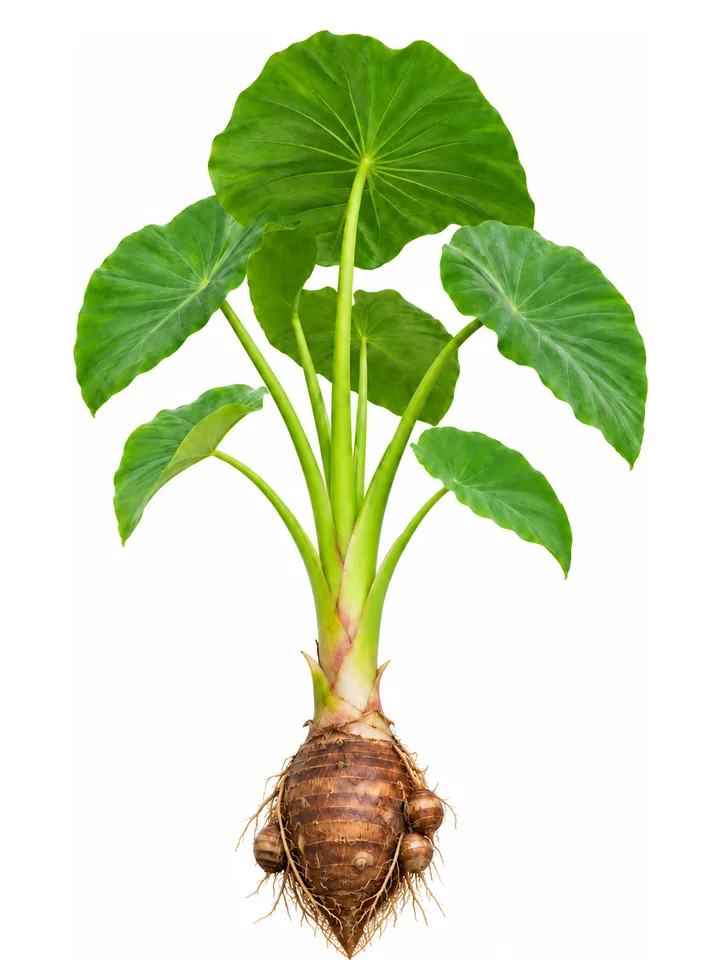
Overall shape, height, branching and growth habit.
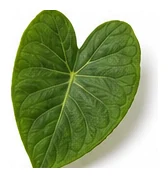
Leaf shape, edges, colour and vein pattern.
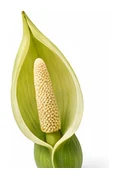
Flower colour, structure and where blooms appear.
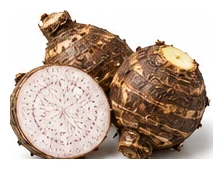
Fruit, root, seed, pod or the strongest identifying feature.
A quick garden-to-table guide for using Taro after harvest.
Never eat raw corms or leaves. Use only positively identified edible taro, not unidentified ornamental or wild lookalikes.
Peel edible corms and cook thoroughly by boiling, steaming or baking. For edible leaves, boil, discard the water and continue cooking in fresh water until thoroughly cooked.
Refrigerate harvested corms to extend their short keeping period. For dried slices, cook the corm first and dry thoroughly before storage.
Try: Boiled taro, Steamed taro, Baked taro, Cooked leaves.
No avoid list yet.
Must be cooked thoroughly before eating. Keep soil consistently moist.
Create a free account to save your garden layout, personal planting calendar, water and fertiliser schedules, seed inventory and harvest logs.
Create Free Account