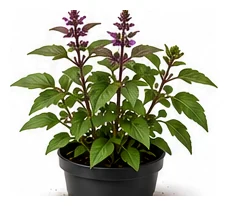
Whole plant
Overall shape, height, branching and growth habit.
Ocimum basilicum var. thyrsiflora
Aromatic basil with anise-clove notes, widely used in Thai and Vietnamese cooking. More heat tolerant than sweet basil.
When to sow, plant out and harvest in each climate. Plotera turns this into reminders for your own garden, location and planting dates.
| Climate | Sow | Transplant / Plant | Harvest |
|---|---|---|---|
| Tropical | Jan - Dec | Jan - Dec | Jan - Dec |
| Subtropical | Jul - Oct | Sep - Dec | Nov - May |
| Mediterranean | Aug - Oct | Oct - Dec | Dec - Apr |
| Temperate | Mar - May | May - Jun | Jul - Oct |
| Cool | Apr - May | Jun | Aug - Oct |
| Arid | Jul - Sep | Sep - Oct | Nov - Mar |
Thai basil is a warm-season aromatic herb with a distinctive sweet, spicy fragrance, branching stems and decorative flowers. It is grown mainly for fresh leaves and young shoot tips, and can be useful in both kitchen gardens and ornamental containers. Plants need warmth, bright light and freely draining soil, with regular moisture to sustain leafy growth. Although basil can behave as a short-lived perennial in favourable conditions, treating it as a renewable warm-season crop gives more predictable harvests. Regularly picking the shoot tips encourages branching and keeps the plant compact. Remove developing flower spikes when plentiful leaves are the priority, or allow a separate plant to flower for insects and seed. It is sensitive to cold, so start or finish the season under protection where necessary. Containers make it easier to provide warmth and manage moisture.
Choose fertile, well-drained sandy loam with compost and pH 6.0–7.5. The soil should retain moisture without becoming saturated. Ground beds, raised beds and containers all work when drainage is reliable.
Pollination does not affect leaf harvests, and you do not need a second plant for leaves. Basil flowers attract bees and varieties can cross-pollinate. For seed saving, let only the desired variety flower nearby, then collect fully darkened, dry seed; use cuttings to retain a particular plant exactly.
No trellis is normally needed. Harvest above a pair of leaves to encourage branching and remove flower spikes when growing for foliage.
Grow from seed or root non-flowering softwood cuttings in water or potting mix. Cuttings preserve the parent plant's qualities.
Use a container at least 20 cm wide and deep with drainage holes. Larger pots make moisture management easier for vigorous plants.
Choose culinary Thai-basil selections for the desired sweet, spicy flavour. Compact forms suit smaller pots; seek documented downy-mildew resistance where that disease is recurrent.
Leaves yellow and develop dark, fuzzy growth underneath. Remove affected plants, improve airflow and choose resistant selections where available.
Colonies on shoot tips can cause distorted growth. Remove small colonies physically and protect natural predators.
Leaves develop irregular holes or young plants disappear overnight. Inspect after dark and hand-remove pests.
Leaves blacken or collapse after chilling or frost. Keep young plants protected and harvest before damaging cold.
Warmth suits growth, but provide drainage and airflow during humid, rainy conditions.
Grow through warm weather and protect plants when frost or cold nights threaten.
Maintain moisture during dry summers and avoid letting pots dry enough to trigger early flowering.
Plant outside after frost risk passes and use a sunny, sheltered position.
A greenhouse or warm protected container position gives more dependable growth than cold open ground.
Check containers frequently, water at the roots and shelter from severe drying conditions.
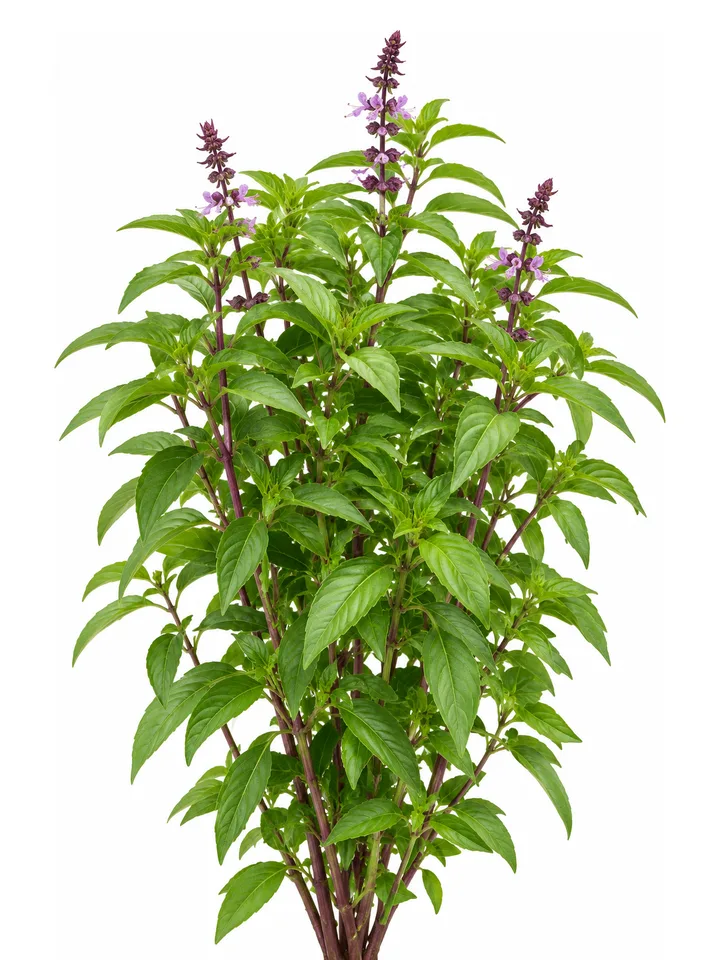
Overall shape, height, branching and growth habit.
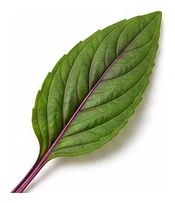
Leaf shape, edges, colour and vein pattern.
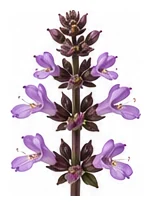
Flower colour, structure and where blooms appear.
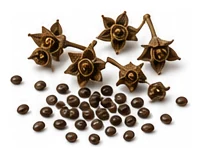
Fruit, root, seed, pod or the strongest identifying feature.
A quick garden-to-table guide for using Thai Basil after harvest.
Use fresh Thai basil leaves and tender tips in salads, wraps and garnishes.
Add leaves near the end of cooking or just before serving to retain their aroma.
Freeze clean leaves or chopped leaves in water for later cooking. Drying is possible but changes the fresh aroma.
Try: Fresh garnish, Salad herb, Fresh wraps, Stir-fry finish.
Pinch tips often and remove flowers for bushier leaf growth.
Create a free account to save your garden layout, personal planting calendar, water and fertiliser schedules, seed inventory and harvest logs.
Create Free Account