Whole plant
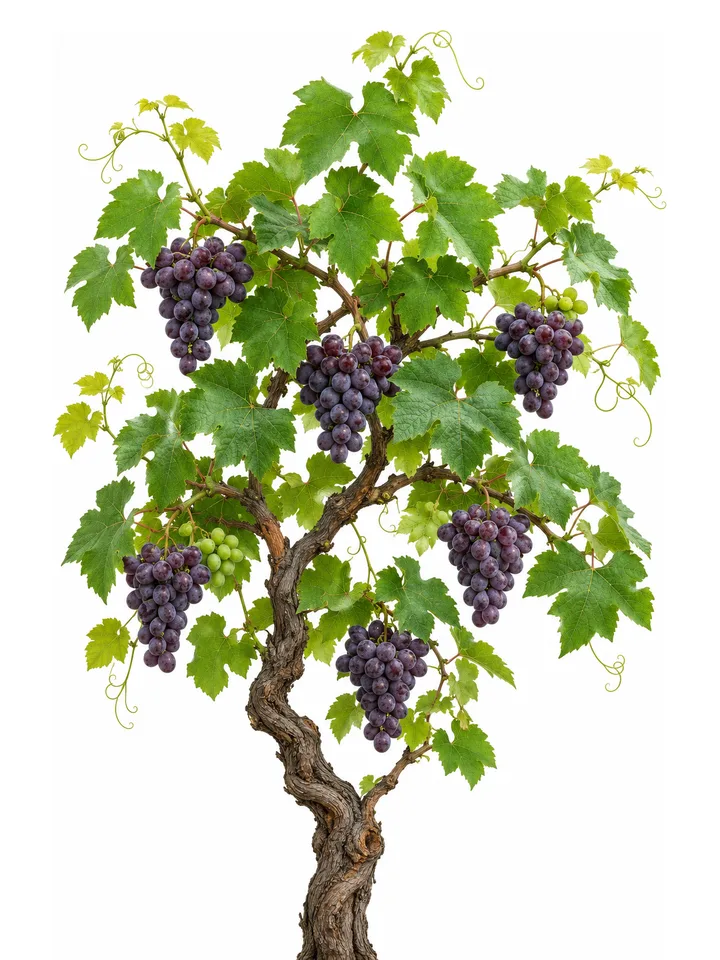
Overall shape, height, branching and growth habit.
Vitis vinifera
Deciduous climbing vine for table grapes, raisins or wine grapes. Handles dry summers once established and needs pruning.
Grapes and raisins can cause kidney failure in dogs, even in small amounts.
When to sow, plant out and harvest in each climate. Plotera turns this into reminders for your own garden, location and planting dates.
| Climate | Sow | Transplant / Plant | Harvest |
|---|---|---|---|
| Tropical | From transplant | Jan - Dec | Jan - Dec |
| Subtropical | From transplant | Mar - Sep | Jan - Dec |
| Mediterranean | From transplant | Mar - May | Jun - Nov |
| Temperate | From transplant | Mar - May | Jun - Oct |
| Cool | From transplant | Mar - May | Jul - Oct |
| Arid | From transplant | Mar - May | Jun - Nov |
Grapes are long-lived deciduous climbing vines grown for fresh fruit, juice, drying or winemaking. This record covers Vitis vinifera, whose varieties differ greatly in their need for summer warmth, winter protection and disease management. A sunny position and a permanent support are essential, and choosing a variety that ripens reliably in your conditions matters more than choosing by fruit colour alone. Expect to spend the early years building a trunk and framework rather than carrying large crops. Fruiting shoots grow from buds on the previous season’s wood, so annual pruning is central to successful growing. An established vine can also shade a pergola, although a dense ornamental canopy needs careful management to produce good fruit. Taste berries before picking: colour alone does not show that a bunch is sweet enough.
Choose deep, freely drained loam or sandy, gravelly soil, ideally around pH 6.5–6.8. Incorporate modest amounts of well-rotted organic matter before planting; avoid excessively rich soil. Ground planting provides the greatest root space. Improve drainage across the planting area rather than leaving roots in a waterlogged planting hole.
Most cultivated varieties have perfect flowers, containing male and female parts, and are self-fertile. Pollen moves within flowers and with air movement and visiting insects; a second vine is usually unnecessary. Under cover, gently shake flowering shoots if air movement is limited. Confirm any unusual variety’s pollination requirements.
Use a sturdy trellis, wires or pergola. Prune hard during winter dormancy, before sap flow begins, retaining the previous season’s wood needed for fruiting. Match cane or spur pruning to the variety; tie in shoots and thin congestion during summer.
Dormant hardwood cuttings can root readily. Grafted vines on suitable resistant rootstocks are preferable where root pests or soil conditions make own-root plants vulnerable. Seed does not reliably preserve a named variety.
Use a pot at least 30 cm wide and deep, with drainage holes and a soil-based potting mix. Train a restricted form and water regularly; ground-grown vines have much more rooting space.
Look for table types for fresh eating, seedless drying types, or wine types suited to your intended use. Prioritise early ripening in short summers and disease resistance where growing seasons are humid.
White powder coats leaves and berries; affected fruit may scar or split. Thin crowded shoots and remove infected material. If necessary, use a locally permitted sulfur or horticultural oil treatment, following temperature restrictions and separation intervals.
Berries soften and develop grey fungal growth, especially in crowded, damp bunches. Remove affected fruit promptly and improve airflow around the fruiting zone.
Ripening berries are pecked or disappear. Protect bunches with securely installed wildlife-safe exclusion netting and check it frequently.
Reliable cropping requires varieties and management adapted to limited winter chilling; ordinary temperate planting advice may not suit year-round warmth.
Choose locally proven varieties and keep the fruiting canopy open where humid weather increases disease pressure.
Sunny, dry summers favour ripening, but powdery mildew still needs monitoring.
Choose varieties that ripen within the available frost-free season and avoid frost pockets.
Early-ripening varieties and a warm sheltered site are important. Vitis vinifera may need winter protection; cold-hardy hybrids are different genetic types.
Supply establishment water and irrigate established vines according to soil moisture. Retain protective foliage around fruit exposed to intense heat.
Overall shape, height, branching and growth habit.
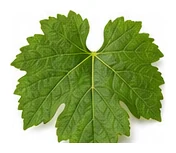
Leaf shape, edges, colour and vein pattern.
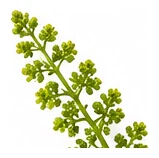
Flower colour, structure and where blooms appear.
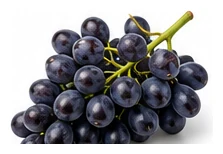
Fruit, root, seed, pod or the strongest identifying feature.
A quick garden-to-table guide for using Grape after harvest.
Eat fully ripe berries fresh, removing seeds if desired.
Cook grapes into juice, sauces or fruit spreads; strain out seeds and tough skins when needed.
Freeze washed seedless berries whole, or halve and deseed seeded berries. Juice and purée can also be frozen.
Try: Fresh grapes, Grape juice, Fruit spread, Frozen grapes.
Create a free account to save your garden layout, personal planting calendar, water and fertiliser schedules, seed inventory and harvest logs.
Create Free Account