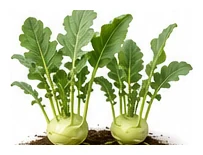
Whole plant
Overall shape, height, branching and growth habit.
Brassica oleracea gongylodes
Unusual brassica with an edible swollen stem that tastes like a mild turnip-broccoli cross. Fast growing. Eat raw or cooked.

When to sow, plant out and harvest in each climate. Plotera turns this into reminders for your own garden, location and planting dates.
| Climate | Sow | Transplant / Plant | Harvest |
|---|---|---|---|
| Tropical | Apr - Aug | Apr - Aug | May - Oct |
| Subtropical | Feb - Aug | Feb - Aug | Mar - Oct |
| Mediterranean | Feb - Sep | Feb - Sep | Mar - Nov |
| Temperate | Feb - Sep | Feb - Sep | Mar - Nov |
| Cool | Feb - Aug | Feb - Aug | Mar - Oct |
| Arid | Mar - Aug | Mar - Aug | Apr - Oct |
Kohlrabi is grown for the rounded, swollen stem that develops above the soil, with leaf stalks projecting around it. It is not a root crop, and the leaves are edible too. The peeled stem is crisp and mild when harvested young, making it useful both raw and cooked. Its relatively quick growth makes small successive sowings practical during suitable weather. The important aim is uninterrupted growth: dry soil, heat and delayed harvesting can produce tough, woody stems. Most ordinary types are best picked when the swollen stem is about 5–8 cm across, although specially bred large types have different harvest sizes. Green and purple-skinned forms are available. Grow it as a cool-season vegetable, using seed or young transplants, and judge readiness by stem size and tenderness rather than waiting only for a calendar date.
Choose moist, well-drained loam enriched with mature compost, ideally pH 6.0–7.0. Ground-level beds work where drainage is good; raised beds are useful on wet sites.
Pollination does not matter for the swollen stem or leaf harvest. Perfect flowers are insect-pollinated, and seed plants can cross with other Brassica oleracea varieties. For seed saving, overwinter suitable plants, grow a group of the same open-pollinated variety and isolate them from other flowering forms.
No staking, trellising or pinching is normally needed. Avoid repeatedly stripping leaves while the stem is enlarging; harvest the whole plant when ready.
Raise from seed, either directly in the bed or as young transplants. Plants retained for seed normally flower in their second growing season.
Kohlrabi is best grown in ground-level or raised beds. If you use a container, choose one holding at least 8 litres with drainage holes, and keep the potting mix evenly moist.
Choose early-maturing types for short growing windows, green or purple skins for appearance, and specially bred large-stemmed types if you want a larger harvest without early woodiness.
The edible stem becomes fibrous after drought, hot weather or late harvesting. Maintain even moisture and harvest promptly.
Tiny holes appear in seedling leaves. Protect emerging plants with insect mesh and keep them growing steadily.
Larvae chew larger holes in leaves. Check undersides, remove larvae and exclude egg-laying insects with mesh.
Clusters of small insects distort leaves. Dislodge colonies with water and preserve natural predators.
Restrict planting to the coolest suitable conditions. Persistent heat makes tender stems difficult to produce.
Use autumn, winter or early spring conditions, avoiding sustained summer heat.
Grow during the cooler seasons and maintain irrigation through dry intervals.
Spring and autumn plantings are useful; successive small sowings spread the harvest.
Choose early types, but protect young plants from hard frost. Prolonged chilling can encourage flowering.
Grow in the cooler season and mulch to reduce moisture fluctuations, which impair stem texture.
Overall shape, height, branching and growth habit.
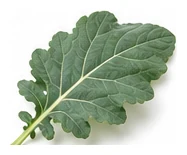
Leaf shape, edges, colour and vein pattern.
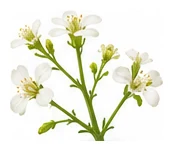
Flower colour, structure and where blooms appear.
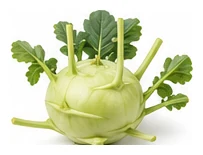
Fruit, root, seed, pod or the strongest identifying feature.
A quick garden-to-table guide for using Kohlrabi after harvest.
Peel the stem and slice or shred the crisp centre for salads.
Roast, steam or grill peeled stems; cook sound young leaves as greens.
Remove leaves and keep sound stems refrigerated in a perforated bag. To freeze, peel the stems, leave small ones whole or dice into 1 cm cubes, blanch whole stems for 3 minutes or cubes for 1 minute, cool promptly, drain, pack and freeze.
Try: Raw slaw, Roasted kohlrabi, Steamed kohlrabi, Cooked greens.
Harvest when stems are 5-7cm diameter — larger ones become woody.
Create a free account to save your garden layout, personal planting calendar, water and fertiliser schedules, seed inventory and harvest logs.
Create Free Account