
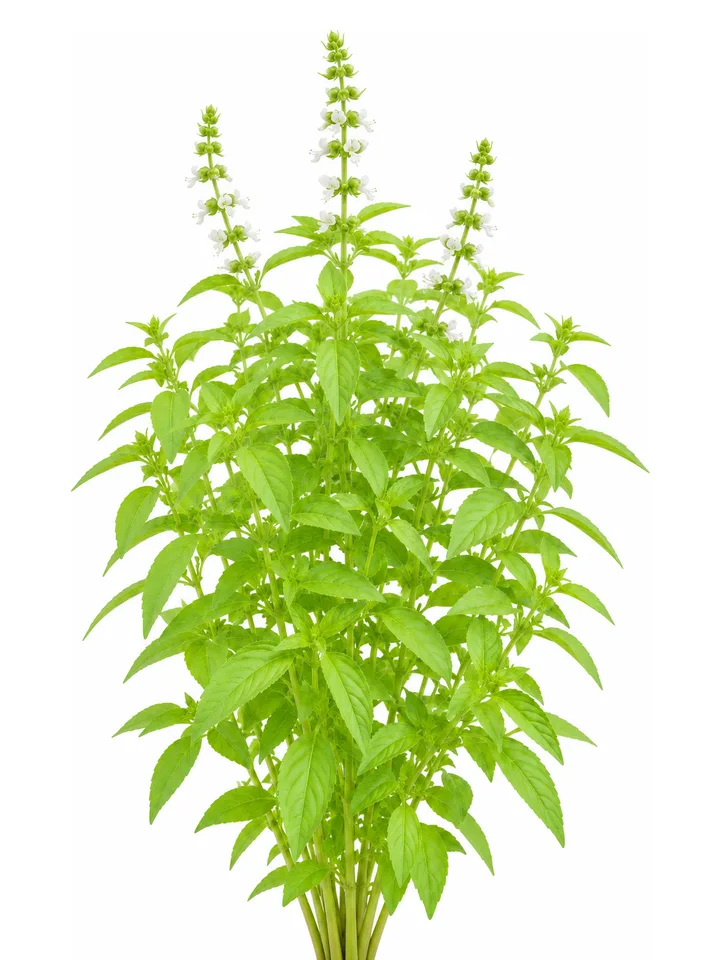
Whole plant
Overall shape, height, branching and growth habit.
Ocimum × africanum
Basil with narrow, pointed, light green leaves, white flowers and a strong lemon scent. Popular in South-East Asian cooking.
When to sow, plant out and harvest in each climate. Plotera turns this into reminders for your own garden, location and planting dates.
| Climate | Sow | Transplant / Plant | Harvest |
|---|---|---|---|
| Tropical | Jan - Dec | Jan - Dec | Jan - Dec |
| Subtropical | Sep - Dec | Sep - Dec | Nov - Mar |
| Mediterranean | Sep - Nov | Sep - Nov | Nov - Feb |
| Temperate | Sep - Nov | Oct - Dec | Nov - Mar |
| Cool | Oct - Nov | Nov - Dec | Dec - Feb |
| Arid | Sep - Nov | Sep - Nov | Nov - Feb |
Lemon basil is a tender annual distinguished by narrow, pointed, light green leaves, white flowers and a pronounced citrus fragrance. It is commonly treated as Ocimum × africanum rather than as an ordinary sweet-basil flavour selection. Plants are generally upright and about 30–60 cm tall, with finer foliage and a lighter habit than broad-leaved basil. The fresh leaves are especially useful where a bright lemon aroma is wanted without sharp acidity. Warmth and strong light encourage vigorous, fragrant growth, while frost, cold soil and waterlogging quickly damage plants. Lemon basil often begins flowering early during heat or other stress, so frequent tip-picking and several successive sowings give a longer supply than relying on one planting. Bees readily visit the white flowers, which can be retained on a few plants while flower spikes are removed from the main leaf crop. Its tender leaves bruise easily and lose aroma during prolonged cooking or storage, making regular fresh harvests particularly worthwhile.
Grow in fertile, well-drained loam with mature organic matter and a pH of 6.0–7.5. Raised beds help in wet ground. Container mix should remain evenly moist while draining freely.
The small bisexual flowers are capable of self-pollination, and bees can carry pollen between plants. Pollination does not affect the leaf harvest. Hand-pollination is unnecessary; seed savers should isolate it from other compatible basil varieties because crossing can alter fragrance and leaf form in the next generation.
Staking is rarely needed. Pinch stems above leaf pairs to encourage branching and remove flower spikes for continued leaf production. Replace old, heavily flowering plants rather than cutting into bare stems.
Propagate from seed or soft stem cuttings. Cuttings preserve the exact fragrance and habit of a selected plant, while seedlings may show some variation.
Use one plant per container at least 20 cm wide and 20 cm deep, with free drainage. A larger pot buffers the roots against heat and drying.
Choose strongly lemon-scented, narrow-leaved selections with late flowering for long harvests. Compact forms suit containers, while vigorous, more downy-mildew-tolerant selections are useful in humid conditions.
Yellow angular areas develop above grey-purple spores on leaf undersides. Increase airflow, keep leaves dry, water at soil level and remove infected plants promptly.
Soft tips become curled and sticky where colonies feed. Dislodge them with water, remove badly infested shoots and encourage natural predators.
Young plants acquire ragged holes or disappear overnight. Reduce damp hiding places, hand-pick and protect pots or beds with physical barriers.
One side or the whole plant wilts and yellows, often with darkened stem tissue. Remove the plant and contaminated debris, and use clean medium for replacements.
Stems rapidly form flower spikes and leaf production slows. Harvest and pinch frequently, maintain even moisture and replace plants from successive sowings.
Grow in the drier, less humid season with morning sun and shelter from persistent rain. Repeat sowings because heat can trigger early flowering.
Give good airflow and light afternoon shade during extreme heat. Avoid humid, crowded positions that favour downy mildew.
Full sun suits the warm growing season if soil moisture remains steady. Several sowings maintain quality through prolonged heat.
Start under protection and plant outside only after nights are reliably mild. A sunny sheltered site improves fragrance and speed of growth.
Grow in a greenhouse, warm raised bed or movable container. Choose fast, late-flowering selections and harvest before cold nights return.
Use afternoon shade during intense heat and protect from drying winds. Deep, regular watering reduces stress-induced flowering.
Overall shape, height, branching and growth habit.

Leaf shape, edges, colour and vein pattern.

Flower colour, structure and where blooms appear.

Fruit, root, seed, pod or the strongest identifying feature.
A quick garden-to-table guide for using Lemon Basil after harvest.
Use tender leaves in salads, cold dressings, drinks and garnishes for a fresh citrus fragrance. The edible flowers make a mild aromatic garnish.
Add late to soups, curries, stir-fries or seafood dishes because prolonged heat disperses the lemon aroma.
Freeze chopped leaves in water or as a concentrated purée. Leaves may be dried in shade, but freezing retains more of their fresh fragrance.
Try: Fish parcels, Lemon basil seeds drink, Herb salad, Grilled prawns.
Create a free account to save your garden layout, personal planting calendar, water and fertiliser schedules, seed inventory and harvest logs.
Create Free Account