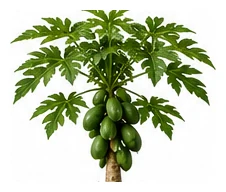
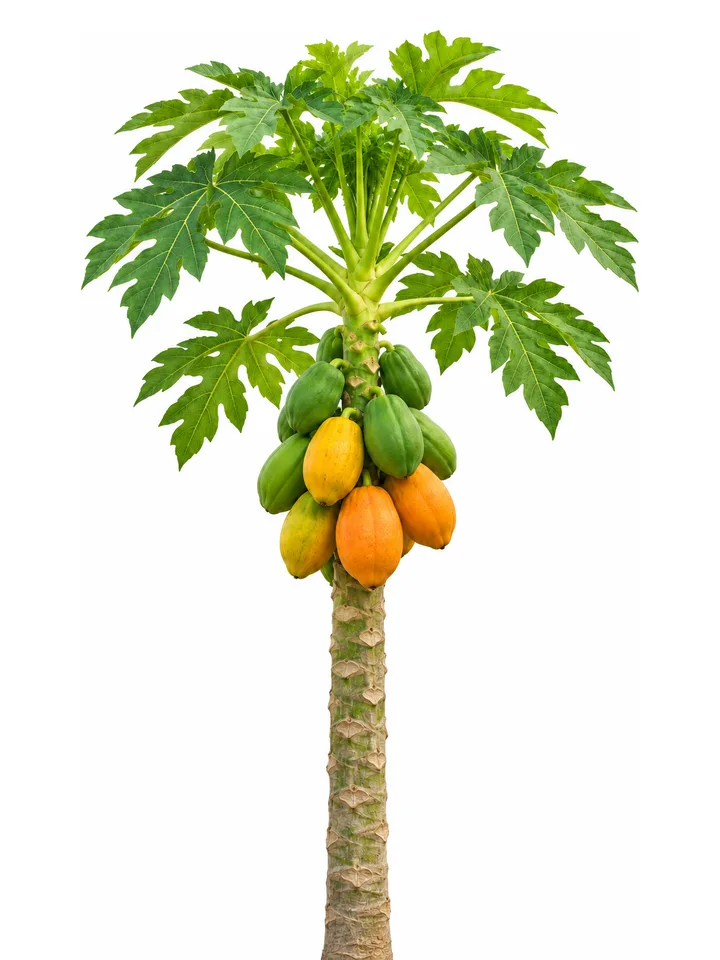
Whole plant
Overall shape, height, branching and growth habit.
Carica papaya
Fast tropical fruiting plant with melon-like fruit. Needs warmth, drainage and protection from frost and wind.
When to sow, plant out and harvest in each climate. Plotera turns this into reminders for your own garden, location and planting dates.
| Climate | Sow | Transplant / Plant | Harvest |
|---|---|---|---|
| Tropical | Jan - Dec | Jan - Dec | Jan - Dec |
| Subtropical | Sep - Dec | Sep - Dec | Jan - Dec |
| Mediterranean | Sep - Nov | Nov - Dec | Jan - Dec |
| Temperate | Mar - May | May - Jun | Jul - Oct |
| Cool | Apr - May | Jun | Aug - Oct |
| Arid | Sep - Nov | Sep - Nov | Jan - Dec |
Papaya is a fast-growing tropical perennial with a soft, upright stem, large leaves and fruit clustered close to the trunk. It is grown mainly for sweet ripe flesh, while green fruit can be cooked as a vegetable. In reliably warm conditions it can start cropping comparatively quickly and continue producing while growth remains active. It is usually managed as a short-lived plant because cold, wind, disease and increasing height eventually make harvesting difficult. Seedlings do not all have the same flower type: plants may be male, female or bisexual, so choosing planting material affects whether a small planting will fruit. Warm roots, sunlight, steady moisture and exceptional drainage are central to success. A sheltered site is important because a heavy fruit load on a soft stem is vulnerable to wind. Frost and prolonged cool conditions seriously restrict growth and production.
Provide deep, porous loam or sandy loam with organic matter and excellent drainage. Aim for pH 6.0–7.0. Use broad mounds or raised rows where heavy rain could saturate roots; avoid depressions and compacted soil.
Male plants bear male flowers, female plants bear female flowers, and bisexual plants bear perfect flowers. Bisexual plants usually self-pollinate; females need pollen from a male or bisexual plant, moved by insects or wind. Grow several seedlings until sex is clear, then remove excess males while retaining a pollen source for females. Flower expression can change with stressful temperatures.
Do not routinely pinch or head back the main growing point. Remove dead leaves carefully; if damage produces side shoots, retain one or two vigorous shoots and support them against breakage.
Seed is the usual home method. Remove the gelatinous coating, rinse and sow in clean seed-raising mix; cuttings and tissue culture are specialised alternatives.
Full-sized plants are poorly suited to ordinary small pots. Compact forms can be grown in large, freely draining containers for movement into warm shelter, but allow ample root space and height and expect more demanding watering and feeding.
Choose compact types for easier protection and harvesting, bisexual-flowered lines for small plantings, and locally suitable disease-resistant selections. Fruit types range from smaller single-serving forms to much larger fruit with yellow or reddish flesh.
Mottled or distorted leaves, dark stem streaks and ring-shaped fruit markings indicate possible infection. There is no cure; remove infected plants and replace with healthy material.
Plants wilt or collapse despite wet soil, with rotting roots or stem bases. Use clean propagation mix, improve drainage and avoid overwatering.
Ripening fruit develops sunken brown or black spots that enlarge. Remove affected fruit, keep the planting clean and avoid wetting fruit during irrigation.
Leaves develop pale stippling and may yellow, especially during dry weather. Inspect undersides, reduce plant stress and conserve natural predators.
Warm conditions favour continuous growth and cropping. Prioritise wet-season drainage, wind shelter and disease monitoring.
Plant as sustained warmth returns and protect from frost. Cool conditions can interrupt flowering and distort fruit.
Dry summers require irrigation, while cold winters may prevent reliable cropping. Use a warm, frost-free protected position.
Outdoor cultivation is unreliable where winters are cold. Fruiting requires warm protected cultivation with sufficient space.
A heated, very bright growing space is needed for meaningful growth. Cool roots and short warm seasons make fruit production difficult.
Provide dependable irrigation and wind shelter. Very hot, dry conditions can disrupt normal flower development.
Overall shape, height, branching and growth habit.
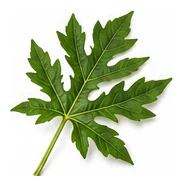
Leaf shape, edges, colour and vein pattern.
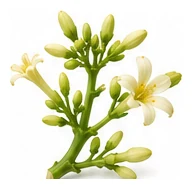
Flower colour, structure and where blooms appear.
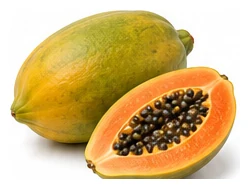
Fruit, root, seed, pod or the strongest identifying feature.
A quick garden-to-table guide for using Papaya after harvest.
Peel ripe fruit, remove the seeds and serve the flesh fresh.
Peel and deseed green papaya before cooking it as a vegetable; ripe flesh can also be used in cooked desserts.
Dry prepared flesh or use a tested papaya jam or pickle recipe.
Try: Fresh fruit, Cooked green papaya, Dried papaya, Jam.
No avoid list yet.
Grow several seedlings if sex is unknown; remove excess males once flowering is clear.
Create a free account to save your garden layout, personal planting calendar, water and fertiliser schedules, seed inventory and harvest logs.
Create Free Account