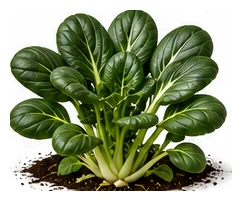
Whole plant
Overall shape, height, branching and growth habit.
Brassica rapa subsp. narinosa
Cold-tolerant Asian green forming low spoon-shaped rosettes. Excellent for salads, stir-fries and shoulder-season growing.
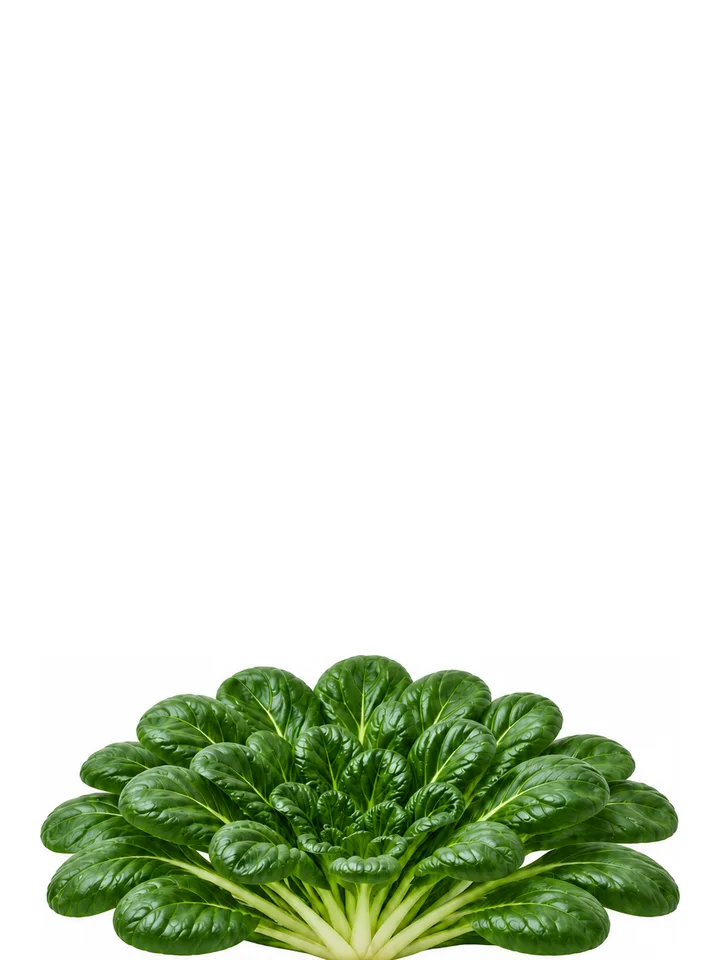
When to sow, plant out and harvest in each climate. Plotera turns this into reminders for your own garden, location and planting dates.
| Climate | Sow | Transplant / Plant | Harvest |
|---|---|---|---|
| Tropical | Apr - Aug | Apr - Aug | May - Sep |
| Subtropical | Mar - Aug | Apr - Aug | May - Oct |
| Mediterranean | Mar - Sep | Apr - Sep | May - Nov |
| Temperate | Feb - Apr | Apr - Jun | May - Oct |
| Cool | Mar - May | May - Jul | Jun - Oct |
| Arid | Mar - May | Apr - Jun | May - Aug |
Tatsoi is a leafy brassica that forms a low rosette of dark, spoon-shaped leaves. Its compact shape makes it useful for small beds, edging and containers, while its mild flavour suits both salads and cooked dishes. You can pick outer leaves repeatedly or harvest the whole rosette when it is full and tender. It is one of the more cold-tolerant leafy greens, making it particularly useful for autumn crops and protected winter harvests. Cold tolerance does not remove the need to establish plants before growth slows, and hot, dry weather is much less favourable. Repeated small sowings help maintain a supply of young leaves. Keep the growing centre intact during repeated picking, maintain good airflow and drainage, and inspect low leaves carefully for pests before bringing them into the kitchen.
Prepare a fine, firm seedbed in fertile, well-drained soil with mature compost added according to soil condition. A pH target of 6.2–6.5 is suitable; raised beds help where drainage is poor.
Pollination does not affect the leaf or rosette harvest. Tatsoi has perfect flowers and should generally be treated as a self-incompatible Brassica rapa crop for seed saving. Grow several compatible plants, permit insect pollination and isolate them from other flowering B. rapa varieties.
No staking, trellising or pinching is needed for leaves. Remove damaged outer leaves and preserve the central growing point for repeat harvests.
Grow from directly sown seed or young transplants. Seed saving requires healthy, isolated plants allowed to flower and mature pods.
For baby leaves, use a broad container more than 15 cm deep with unobstructed drainage holes. Allow more space when growing whole rosettes.
Look for compact rosette forms for whole-plant harvest and selections intended for baby-leaf production when repeated picking is preferred.
Small holes scar young leaves. Use fine insect mesh from sowing or transplanting.
Low leaves develop ragged holes and slime trails. Reduce nearby hiding places and collect pests in damp weather.
Clusters beneath leaves cause distorted growth. Wash off small colonies and remove heavily affected leaves.
The rosette sends up a flowering stalk and harvest quality declines. Avoid hot, dry conditions and plant the next batch in cooler weather.
Use the coolest available growing period and harvest young. Hot, dry conditions are unsuitable for a prolonged crop.
Autumn and mild winter sowings offer a useful harvest window.
Use autumn through cool spring conditions, with irrigation during dry intervals.
Autumn sowings are especially useful; spring crops should mature before hot weather.
Establish plants before severe cold and use protection to extend harvesting. Plants tolerate frost better than hot, dry weather.
Grow during the cool season and maintain moisture around the shallow roots.
Overall shape, height, branching and growth habit.
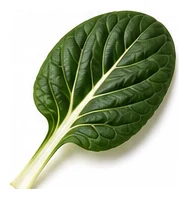
Leaf shape, edges, colour and vein pattern.
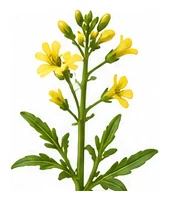
Flower colour, structure and where blooms appear.
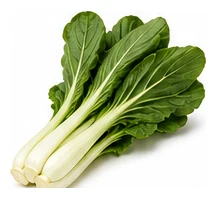
Fruit, root, seed, pod or the strongest identifying feature.
A quick garden-to-table guide for using Tatsoi after harvest.
Wash tender spoon-shaped leaves and add them to salads.
Wilt leaves briefly in a stir-fry or add them near the end of cooking.
Wash surplus leaves, blanch for 2 minutes, cool promptly, drain and freeze for cooked dishes.
Try: Salad leaves, Stir-fry, Wilted greens.
Harvest outer leaves repeatedly or cut the whole rosette when compact and full.
Create a free account to save your garden layout, personal planting calendar, water and fertiliser schedules, seed inventory and harvest logs.
Create Free Account