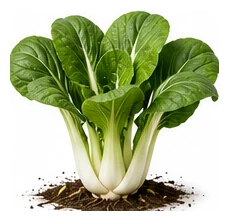
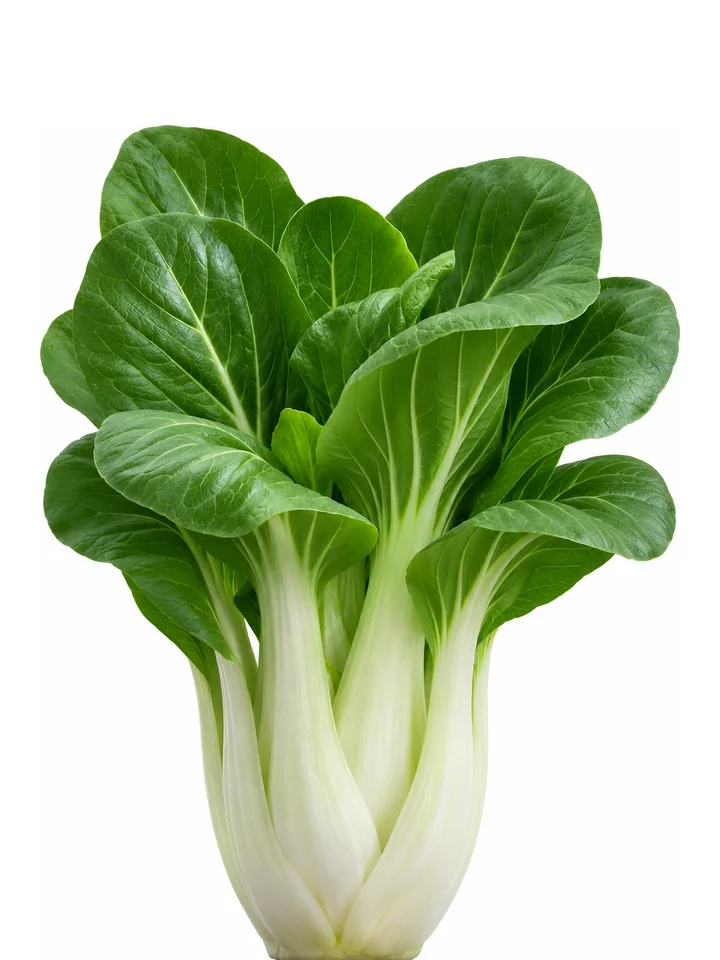
Whole plant
Overall shape, height, branching and growth habit.
Brassica rapa subsp. chinensis
Fast Asian brassica with crisp white or green stems and tender leaves. Best in mild weather with steady moisture.
When to sow, plant out and harvest in each climate. Plotera turns this into reminders for your own garden, location and planting dates.
| Climate | Sow | Transplant / Plant | Harvest |
|---|---|---|---|
| Tropical | Apr - Aug | Apr - Aug | May - Sep |
| Subtropical | Mar - Aug | Apr - Aug | May - Oct |
| Mediterranean | Mar - Sep | Apr - Sep | May - Nov |
| Temperate | Feb - Apr | Apr - Jun | May - Oct |
| Cool | Mar - May | May - Jul | Jun - Oct |
| Arid | Mar - May | Apr - Jun | May - Aug |
Pak choy is a quick-growing leafy brassica with broad leaves and thick, succulent leaf stalks. Plants form upright rosettes rather than tightly wrapped heads, and both leaves and stalks are useful in the kitchen. You can pick baby leaves for salads or wait for a larger rosette for cooking. Varieties differ in size, leaf colour and whether the stalks are white or pale green, so compact selections can be particularly useful in containers. Mild, moist conditions favour good growth. Flowering before the rosette develops is a common disappointment: excessively hot or cold conditions and drought can all encourage bolting. Small repeated sowings, suitable varieties and careful watering help spread the harvest. In warmer weather, light shade can reduce stress, but planting into a suitable season remains the most dependable approach.
Use fertile, moisture-retentive soil that drains freely, enriched with mature compost. Grow in prepared ground or raised beds; use potting mix rather than compact garden soil in containers.
Pollination is unnecessary for leaves and stalks. Perfect flowers are generally self-incompatible and need pollen from another compatible Brassica rapa plant for dependable seed production. Keep several plants of one open-pollinated variety, allow insect access and isolate them from other flowering B. rapa forms.
No staking or pinching is needed. Pick selected outer leaves without injuring the centre, or cut the whole rosette when ready.
Grow from seed, either directly or as young module-raised transplants. Use open-pollinated plants and appropriate isolation for seed saving.
For baby leaves, choose a pot at least 30 cm wide with drainage holes. Keep the potting mix moist and choose compact varieties for limited space.
Look for compact or baby types for containers, bolt-resistant types for longer harvests, and white-stalked, green-stalked or purple-leaved forms for different appearance.
A central flowering stalk develops before the rosette fills out. Avoid temperature stress, keep moisture steady and choose bolt-resistant types.
Tiny holes make young leaves look peppered. Protect seedlings with fine insect mesh.
Ragged holes and damaged seedlings appear in damp weather. Collect pests and remove nearby hiding places.
Colonies beneath leaves cause curling and contamination of the harvest. Wash them off and remove badly infested leaves.
Use the coolest available season and consider harvesting as baby leaves when full rosettes bolt quickly.
Favour autumn and mild winter conditions, protecting young plants from unusual cold.
Cool-season crops benefit from mild weather; provide irrigation between rains.
Spring and autumn are useful, but protect spring seedlings from chilling that can trigger bolting.
Use a sheltered sunny position and covers during cold spells. Avoid exposing young plants to prolonged cold.
Choose cool weather, light shade during warmer spells and dependable irrigation.
Overall shape, height, branching and growth habit.
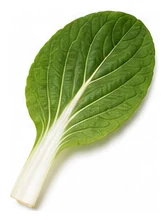
Leaf shape, edges, colour and vein pattern.
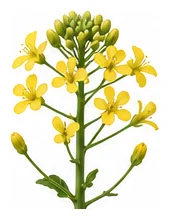
Flower colour, structure and where blooms appear.
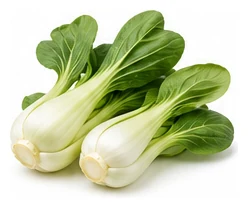
Fruit, root, seed, pod or the strongest identifying feature.
A quick garden-to-table guide for using Pak Choy after harvest.
Slice young heads or baby leaves thinly into salads and slaws; the crisp white stems add crunch.
Steam, sauté or stir-fry briefly, allowing thicker stalk pieces more time than the leaves.
For surplus leaves intended for cooking, wash, blanch for 2 minutes, cool promptly, drain and freeze.
Try: Stir-fry, Steamed greens, Crunchy slaw, Baby leaf salad.
Use shade cloth in heat to reduce bolting. Baby leaves can be harvested early.
Create a free account to save your garden layout, personal planting calendar, water and fertiliser schedules, seed inventory and harvest logs.
Create Free Account