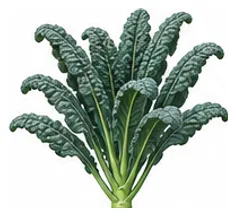
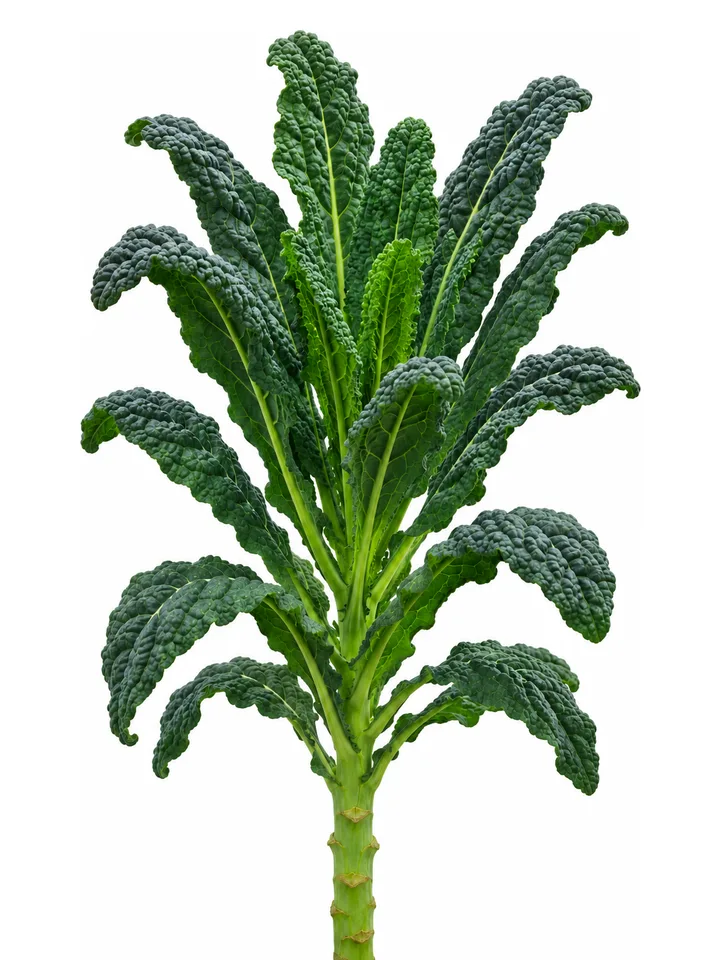
Whole plant
Overall shape, height, branching and growth habit.
Brassica oleracea (Acephala Group)
Kale with long, narrow, heavily blistered, very dark blue-green leaves on an upright, palm-like stem. Tender, rich and slow to bolt.
When to sow, plant out and harvest in each climate. Plotera turns this into reminders for your own garden, location and planting dates.
| Climate | Sow | Transplant / Plant | Harvest |
|---|---|---|---|
| Tropical | Apr - Aug | Apr - Aug | Jun - Oct |
| Subtropical | Mar - Aug | Mar - Aug | May - Oct |
| Mediterranean | Feb - Sep | Feb - Sep | Apr - Nov |
| Temperate | Feb - Sep | Feb - Sep | Apr - Nov |
| Cool | Feb - Sep | Feb - Sep | Apr - Nov |
| Arid | Mar - Aug | Mar - Aug | May - Oct |
Tuscan kale is the tall, narrow-leaved kale often called lacinato, dinosaur kale or cavolo nero. Instead of a frilled rosette, it produces long, heavily blistered, blue-green leaves along an upright central stem. The leaves are usually more tender and less bulky than heavily curled kale, with a rich flavour suited to both young raw leaves and mature cooked foliage. Plants tolerate frost well, and cool conditions can improve flavour, but they also remain productive longer into warm weather than many heading brassicas. Harvest begins with the lowest usable leaves and moves upward as the stem elongates, leaving the growing tip untouched. A healthy plant can therefore crop for many weeks and develop a palm-like shape. Tuscan kale needs steady moisture, fertile soil and protection from the same caterpillars, sap-sucking insects and soil diseases that attack other Brassica oleracea crops. It is productive in beds and sufficiently architectural for ornamental edible planting.
Use fertile, nitrogen-rich, free-draining soil that remains evenly moist. Incorporate mature compost or well-rotted manure before planting and firm the soil around transplants. Aim for pH 6.0–7.0; correcting strongly acidic soil also reduces clubroot risk. Raised beds help where drainage is poor.
Tuscan kale has perfect flowers but Brassica oleracea is usually cross-pollinated by insects and is often self-incompatible. Pollination is irrelevant to the leaf harvest. Seed plants normally flower after winter exposure and can cross with other flowering Brassica oleracea forms, so isolate open-pollinated plants and do not save seed from F1 hybrids when true offspring are required.
Plants normally support themselves, but tall stems in exposed sites benefit from earthing up or a stake. Do not pinch the top while leaf production is wanted. Remove damaged lower leaves and harvest from the bottom upward.
Grow Tuscan kale from seed, either direct-sown or raised as transplants.
Use at least 11 L and 20 cm depth for one plant, with 19 L preferred for a full-sized Tuscan plant. Stake the container plant if the tall stem becomes top-heavy.
Choose classic dark, deeply blistered lacinato types for traditional texture; compact or short-stemmed selections for containers; early types for short seasons; and cold-tolerant, heat-tolerant or disease-resistant selections where local conditions demand them.
Leaves develop large holes, droppings and clusters of eggs. Use fine mesh from planting, inspect leaf undersides and hand-pick eggs and larvae.
Grey-green colonies pack into young leaves and cause curling. Wash them off, remove badly infested leaves and support natural predators.
Seedlings acquire many tiny round holes and may be checked severely. Protect with fine mesh, keep plants growing steadily and remove nearby brassica weeds.
Yellow V-shaped lesions, dark veins or pale patches with growth beneath leaves indicate disease. Improve airflow, avoid overhead watering, rotate the crop and remove infected debris.
Plants wilt despite moist soil and have swollen, distorted roots. Improve drainage and pH, avoid moving contaminated soil and rotate away from susceptible plants for several years.
Grow in the coolest season with strong airflow and insect protection. Heat and humidity increase pest and disease pressure.
Cool-season crops give the best leaves, although heat-tolerant selections may continue longer. Afternoon shade helps during hot spells.
Plant for cool-season and winter harvests, irrigating through dry periods. Mild winters can support a long picking season.
Grow from spring into winter and use frost-hardy selections for extended harvests. Fine mesh is especially valuable while plants are young.
Choose early, cold-tolerant selections and start transplants under cover. Plants tolerate frost well but growth becomes slow in very low temperatures.
Provide wind shelter, mulch and deep irrigation so leaves do not become tough. Light afternoon shade may reduce heat stress.
Overall shape, height, branching and growth habit.
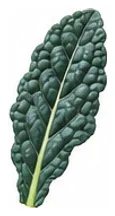
Leaf shape, edges, colour and vein pattern.
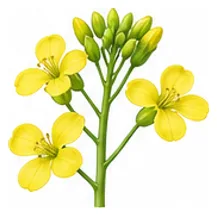
Flower colour, structure and where blooms appear.
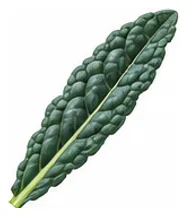
Fruit, root, seed, pod or the strongest identifying feature.
A quick garden-to-table guide for using Tuscan Kale after harvest.
Use small leaves finely shredded or massaged with dressing. Remove the firm central rib from larger raw leaves.
Steam, sauté, braise, roast or simmer mature leaves until tender. The strong texture holds well in soups, baked dishes and slow cooking.
Blanch and freeze prepared leaves, or dry thoroughly for flakes and crisp snacks. Remove coarse ribs before freezing if a tender result is preferred.
Try: Ribollita, Kale chips, Pasta with kale, Braised greens.
Create a free account to save your garden layout, personal planting calendar, water and fertiliser schedules, seed inventory and harvest logs.
Create Free Account