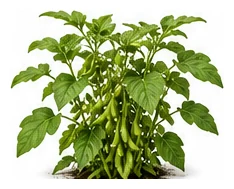
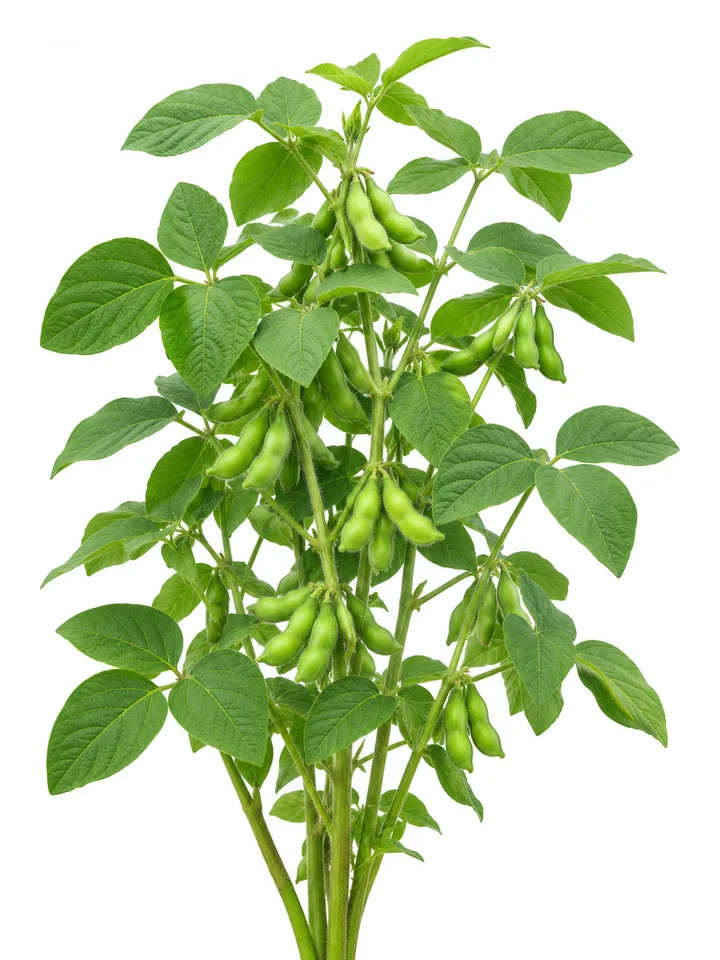
Whole plant
Overall shape, height, branching and growth habit.
Glycine max
Soybean harvested green in the pod. A warm-season legume for fresh eating or dried beans.
When to sow, plant out and harvest in each climate. Plotera turns this into reminders for your own garden, location and planting dates.
| Climate | Sow | Transplant / Plant | Harvest |
|---|---|---|---|
| Tropical | Jan - Dec | Jan - Dec | Jan - Dec |
| Subtropical | Jul - Oct | Sep - Dec | Nov - May |
| Mediterranean | Aug - Oct | Oct - Dec | Dec - Apr |
| Temperate | Mar - May | May - Jun | Jul - Oct |
| Cool | Apr - May | Jun | Aug - Oct |
| Arid | Jul - Sep | Sep - Oct | Nov - Mar |
Edamame is soybean harvested while its seeds are fully swollen but still green and tender. Choose vegetable soybean varieties bred for this eating stage rather than assuming every soybean will give the same flavour and texture. Plants form upright bushes with clusters of short, hairy pods, usually containing two or three seeds. They generally need no climbing support and suit a sunny, warm vegetable bed. The harvest window is brief: once pods or leaves begin yellowing, the seeds become starchier and lose their sweet, fresh quality. Most pods on a plant become ready close together, so several sowings or different maturity types can spread the supply. Warm soil helps establishment, and reliable moisture supports flowering and filling seeds. Cook the beans before eating, discard the fibrous pods and refrigerate or preserve the harvest promptly.
Use fertile, well-drained loam with mature organic matter; pH 6–7 is suitable. Ground beds and raised beds both work, provided roots are not waterlogged.
Small flowers are perfect and predominantly self-pollinating. No second variety or hand-pollination is needed. Insects can occasionally move pollen between varieties; separate seed-saving varieties and retain fully mature dry seeds rather than green edamame.
Plants are usually self-supporting and need no pinching. Preserve healthy branches because they carry the pods.
Grow from seed, direct sown or started in individual modules. Use a soybean-compatible nitrogen-fixing inoculant where appropriate.
For compact bush plants, use a drained container of at least 20 litres with about 30 cm or more of rooting depth. Expect a smaller total harvest than from a bed.
Choose large-seeded vegetable types for edamame, early types for short summers and locally adapted maturity groups for dependable flowering. Green- and black-seeded types are available.
Young shoots develop ragged holes or disappear. Hand-remove pests and protect seedlings until established.
Colonies cause curled, sticky foliage. Wash them off and preserve natural predators.
Leaves become speckled or bronzed during hot, dry weather. Prevent drought stress and wash leaf undersides.
Seeds rot or seedlings remain weak. Wait for warm soil and improve drainage before resowing.
Use a locally adapted maturity type because day length affects flowering; avoid saturated soil.
Choose a warm, frost-free growing period and a variety adapted to local day length.
Summer warmth suits growth, but flowering and seed filling require irrigation during dry weather.
Sow after frost into warm soil and choose a maturity type that finishes before autumn cold.
Use early-maturing types, start under protection if needed and choose the warmest sunny site.
Supply reliable irrigation during pod filling and monitor for mites in hot, dry conditions.
Overall shape, height, branching and growth habit.
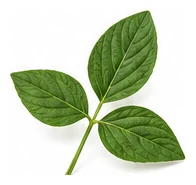
Leaf shape, edges, colour and vein pattern.
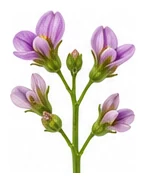
Flower colour, structure and where blooms appear.
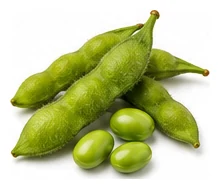
Fruit, root, seed, pod or the strongest identifying feature.
A quick garden-to-table guide for using Edamame after harvest.
Do not eat edamame raw; cook the seeds before eating.
Boil or steam the pods, then remove and eat the seeds. Discard the hairy pods.
Blanch freshly harvested pods, cool promptly and freeze, either shelled or in their pods.
Try: Steamed in pods, Boiled snack, Cooked beans.
Create a free account to save your garden layout, personal planting calendar, water and fertiliser schedules, seed inventory and harvest logs.
Create Free Account