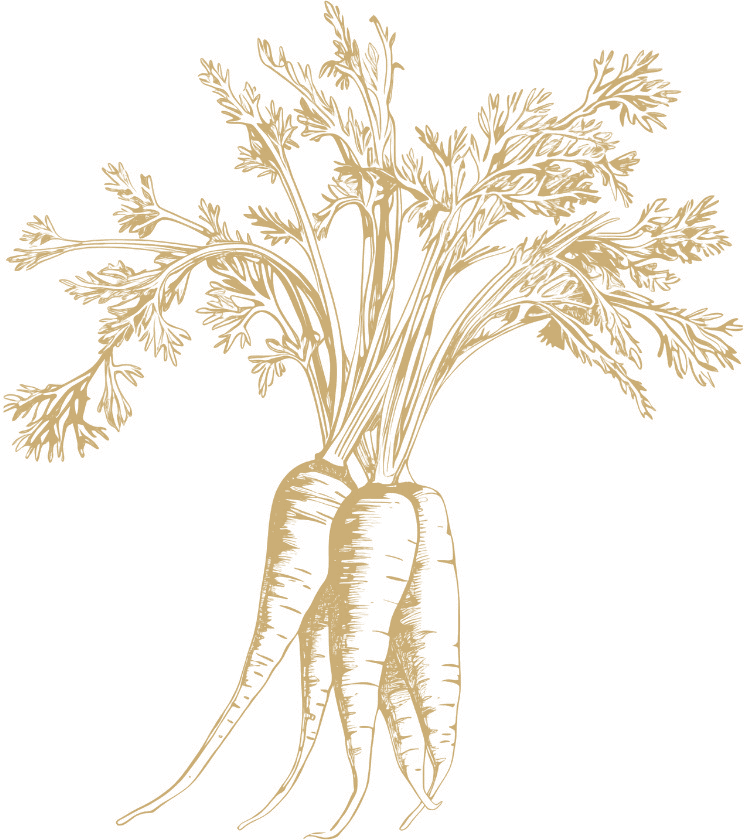

Whole plant
Overall shape, height, branching and growth habit.
Daucus carota subsp. sativus
Fast carrot pulled small and slender, sold in bunches with the tops on. Sweet and tender, and quick to crop.
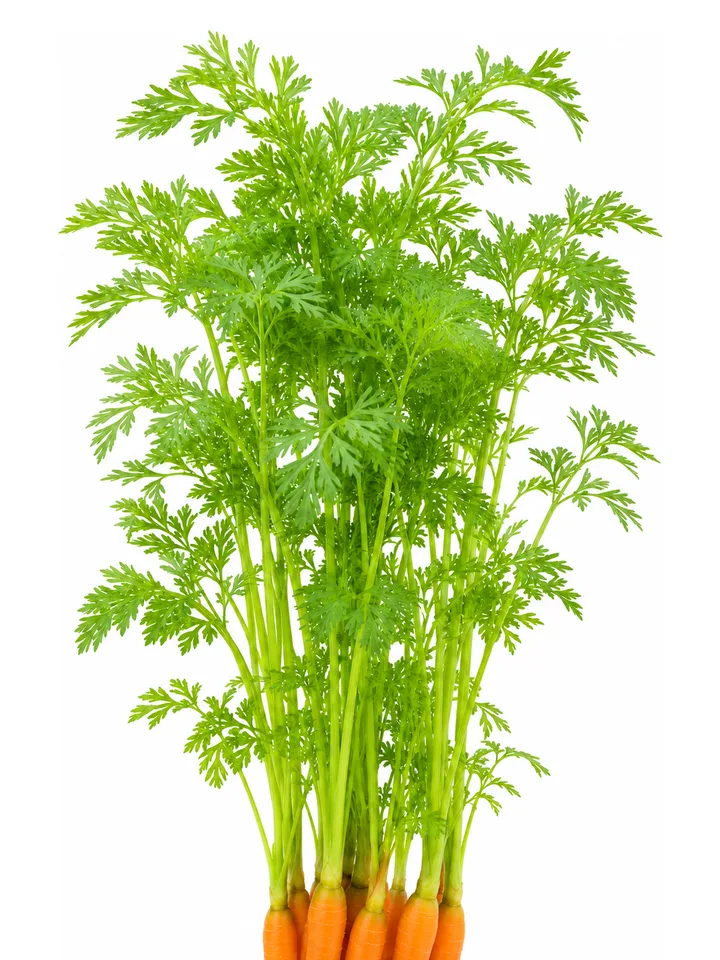
When to sow, plant out and harvest in each climate. Plotera turns this into reminders for your own garden, location and planting dates.
| Climate | Sow | Transplant / Plant | Harvest |
|---|---|---|---|
| Tropical | Apr - Aug | Apr - Aug | Jun - Oct |
| Subtropical | Mar - Aug | Mar - Aug | May - Oct |
| Mediterranean | Feb - Aug | Feb - Aug | Apr - Oct |
| Temperate | Feb - Aug | Feb - Aug | Apr - Oct |
| Cool | Feb - Jul | Feb - Jul | Apr - Sep |
| Arid | Mar - Jul | Mar - Jul | May - Sep |
Dutch carrots are fast, slender carrots harvested young at roughly finger thickness and commonly bunched with their tops. They are valued for tenderness, sweetness and a short cropping period rather than maximum root size or long storage. Many belong to Amsterdam forcing or narrow Nantes-type groups, with smooth cylindrical roots that colour early. Carrots are biennials, but the edible taproot is harvested during its first growing season before a flower stalk develops. Direct sowing is essential because transplanting bends or damages the young taproot. The seed is small and slow to emerge, so the surface must remain moist and free from crusting and weeds. Loose, stone-free soil produces the straightest roots; compacted soil, fresh coarse organic matter or obstacles cause forks and twists. Sow short rows or small batches at intervals, then thin carefully. Harvest promptly at finger thickness, because the appeal of this type is its tender texture rather than a large, woody root.
Use deep, loose, stone-free sandy loam with good drainage and no compaction. Aim for pH 6.0–7.0. Incorporate only mature compost well before sowing; fresh manure, coarse wood fragments and undecomposed material can cause forked roots. Raised beds and deep containers are useful where native soil is shallow, rocky or heavy.
Carrots have perfect flowers but are cross-pollinated by insects. Pollination is irrelevant to the root harvest. Seed saving requires healthy roots to survive into a second growing season, and flowering plants must be isolated from other carrot varieties and wild carrots because they cross readily.
No staking or pruning is needed. Thin crowded seedlings and remove flower stalk plants. Hill a little loose soil over exposed shoulders if they begin turning green.
Propagate only from directly sown seed for the edible crop. Carrots do not grow true roots from cuttings or division, and transplanting young taproots causes distortion.
Use at least 11 L with a minimum depth of 30 cm. Short finger types suit containers particularly well; fill with loose, stone-free potting mix and provide drainage holes.
Look for Amsterdam forcing or other slender finger types that colour early, coreless cylindrical selections for tenderness, short blunt-rooted forms for containers or shallow soil, and carrot-fly-resistant or early-maturing selections where those traits are useful.
Larvae make rusty tunnels through roots, often followed by rot. Cover the entire crop with fine insect mesh, rotate the bed and minimise foliage disturbance while thinning.
Seedlings disappear or show ragged leaf damage. Remove hiding places, inspect at night and protect the row during establishment.
Narrow holes or tunnels damage roots below ground. Avoid recently grassy ground, rotate crops and remove affected roots after harvest.
Roots divide or bend after striking stones, compacted soil or coarse fresh organic matter. Prepare a deep fine seedbed and avoid root disturbance.
Mature roots crack after moisture changes sharply. Keep soil moisture reasonably even and harvest as soon as roots reach the desired size.
Grow during the coolest season and use light shade to protect germinating seedlings. Warm roots may develop poorer colour and texture.
Cool-season sowings give the sweetest, straightest bunching roots. Keep the seedbed moist during warm, drying weather.
Sow through cool conditions and irrigate the surface carefully until emergence. Dry soil followed by heavy watering increases splitting.
Make successive sowings from workable spring soil into the cooler later season. Protect against carrot fly from emergence onward.
Use early finger or Amsterdam types and sow as soon as workable soil warms enough for reliable emergence. Covers can speed establishment.
Use a fine mulch after emergence and frequent light watering during germination, followed by deeper irrigation. Wind protection prevents rapid surface drying.
Overall shape, height, branching and growth habit.
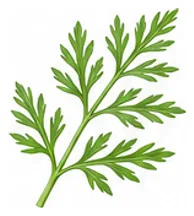
Leaf shape, edges, colour and vein pattern.

Flower colour, structure and where blooms appear.
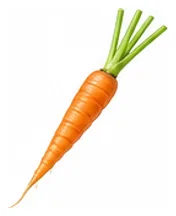
Fruit, root, seed, pod or the strongest identifying feature.
A quick garden-to-table guide for using Dutch Carrot after harvest.
Scrub young roots and eat them whole, sliced or grated in salads and snacks. Tender skins usually need no peeling.
Steam, roast, glaze, sauté or add whole young roots to soups and stews. Short cooking preserves their sweetness and firm texture.
Blanch and freeze cleaned young roots, or use a tested pressure-canning process for plain low-acid packs. Acidified pickles must follow a tested recipe.
Try: Roasted whole with tops, Glazed carrots, Crudités, Lunchbox.
Create a free account to save your garden layout, personal planting calendar, water and fertiliser schedules, seed inventory and harvest logs.
Create Free Account