
Sun first
Most vegetables want six or more hours of direct sun. Watch the spot across a day before committing, because a place that looks bright at noon can be shaded by mid-afternoon. Leafy crops tolerate less sun than fruiting ones.
Most first gardens do not fail at planting. They fail six weeks later, when the novelty has worn off and the watering becomes a chore. Almost every decision below is really about making the garden small and simple enough that you keep tending it.
The most common beginner mistake is scale. A single bed of two or three square metres, tended well, will produce more food than four beds you cannot keep up with — and it teaches you more, because you notice what is happening in it.
You can always add a second bed next season. It is much harder to recover enthusiasm after a garden has visibly failed.
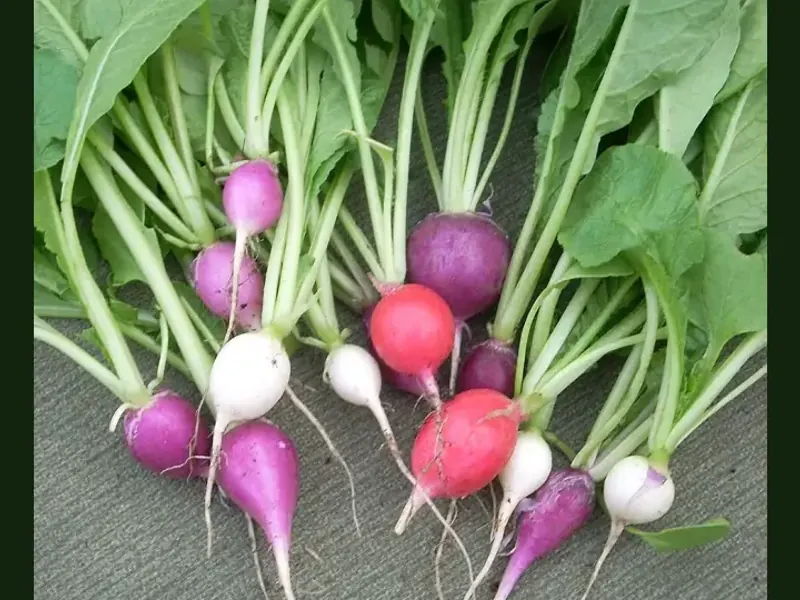
Fast, forgiving and productive enough to feel worth it.
Most vegetables want six or more hours of direct sun. Watch the spot across a day before committing, because a place that looks bright at noon can be shaded by mid-afternoon. Leafy crops tolerate less sun than fruiting ones.
A bed far from a tap gets watered less. That sounds trivial and it is the single most reliable predictor of whether a first garden survives a hot fortnight.
A garden you see every day gets noticed when something changes. One tucked away behind a shed does not. Proximity matters more than perfect conditions.
Every entry lists sowing windows for six climate zones, spacing, days to harvest and companion notes. Start by looking up the three or four crops you want, and check they suit the season where you are.
Fast crops are the best teachers, because you find out whether something worked in weeks rather than months, and a mistake costs very little.
| Crop | Days to harvest | Category |
|---|---|---|
 Basil Basil | 25-35 days | Herbs |
 Coriander Coriander | 25-35 days | Herbs |
 Mizuna Mizuna | 25-45 days | Brassicas |
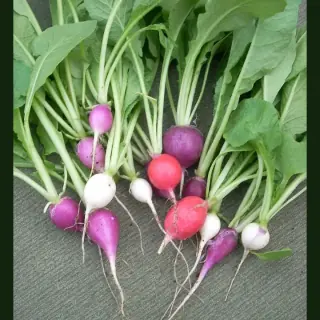
 Radish Radish | 25-45 days | Roots |
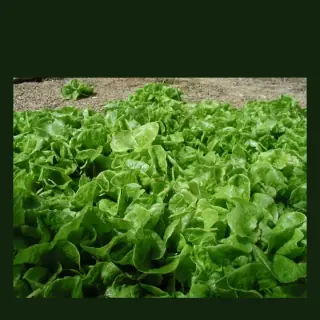
 Rocket Rocket | 28-40 days | Leafy Greens |
 Amaranth Amaranth | 30-45 days | Leafy Greens |
| Crop | Days to harvest | Category |
|---|---|---|
 Dandelion Dandelion | 30-60 days | Flowers |
 Joseph's Coat Amaranth Joseph's Coat Amaranth | 30-60 days | Flowers |
 Kang Kong Kang Kong | 30-60 days | Leafy Greens |
 Mint Mint | 30-40 days | Herbs |
This is sorted purely by speed. Check each plant guide for whether it suits your climate and current season before sowing.
Consistency beats volume. Irregular watering causes more problems — splitting, bolting, blossom drop — than slightly too little water applied reliably.
Check the soil rather than the calendar. Push a finger in; if it is damp below the surface, wait. Overwatering is as common as underwatering in new gardens.
Which crop did well, what got eaten by something, when you actually harvested. Season two is much easier when it starts from notes rather than memory.
Sowing at the wrong time is the other big early mistake. The planting calendar shows what suits the current month.
Some crops give far more for the same effort — see the easy high-yield guide.
Which crops sit beside each other affects how they grow — see the companion planting guide.
Smaller than most people expect. Two or three square metres, or a couple of large containers, is enough to grow a meaningful amount of food while staying easy to keep up with. Scale up next season once the habits are in place.
No. Raised beds help with poor drainage, difficult soil or a bad back, and they warm earlier in spring. They are a convenience rather than a requirement, and ground beds work perfectly well.
Something fast, so you get feedback quickly, plus one or two crops you genuinely like eating. Enthusiasm for a crop you do not want to eat runs out fast. Check the sowing windows for your climate before choosing.
Check the soil rather than following a fixed schedule. Push a finger a few centimetres down; water if it is dry, wait if it is damp. Watering at a consistent time of day matters more than the exact interval.
Some things will, including for experienced gardeners. The useful response is noting what happened and when, so the pattern becomes visible over a couple of seasons. That record is more valuable than any single crop.
It handles the remembering. The garden grid records what is planted where and when, the calendar shows what to sow and when to expect harvest, and plant guides give spacing and watering needs, so decisions are not made from memory.
Create a free account to save your garden layout, personal planting calendar, water and fertiliser schedules, seed inventory and harvest logs.
Create Free Account