




Tolerates imperfect watering
Some crops bolt or split the moment watering becomes irregular. Leafy greens and radishes are more sensitive; established root crops and alliums tend to cope better with a missed day.
Yield per square metre and yield per hour of effort are different questions. A pumpkin produces a lot of food but occupies a bed for months; a tray of salad leaves produces less but can be cut repeatedly in a few weeks. Which one counts as high yield depends on what you are short of.

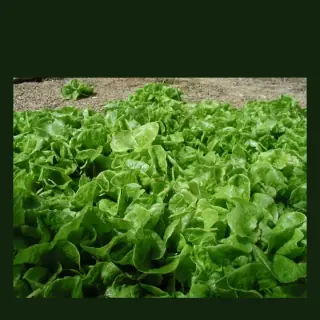
Cut-and-come-again crops keep producing from one planting. Lettuce, silverbeet, kale and many herbs can be harvested repeatedly rather than pulled, so a single sowing feeds you for weeks. These give the best return on a small bed.
Heavy single-harvest crops such as pumpkin, potato and corn produce a large quantity at once but hold the bed for a long time. They suit gardens with space to spare more than small plots.
Fast crops such as radish and many salad leaves are high yield in the sense that turns a bed over quickly. They are also the most forgiving to learn on, because a mistake costs you weeks rather than a season.
Crops that reliably return more than the effort they cost.
Sorted by the lower end of the recorded days-to-harvest range. Fast crops are the easiest way to get a return early, and the least costly place to make mistakes.
Days to harvest assumes reasonable conditions. Cold weather, poor light and inconsistent watering all extend these figures.
Some crops bolt or split the moment watering becomes irregular. Leafy greens and radishes are more sensitive; established root crops and alliums tend to cope better with a missed day.
A crop that reliably attracts a pest you cannot manage is not high yield in practice, however productive it is on paper. Each plant guide records companion planting notes that help here.
Crops that must be picked in a narrow window punish a busy week. Ones that hold in the ground, or keep producing over a long period, are far easier to fit around real life.
One sowing gives one harvest. Staggered sowings turn the same bed into a continuous supply — see the succession sowing guide.
A high-yield crop sown at the wrong time yields nothing. Each plant guide lists sowing windows for six climate zones, and the planting calendar shows what suits now.
In small plots, spacing and height matter more than raw productivity — see the small space guide.
Radish is a common answer because it reaches harvest fastest, which means quick feedback and a small loss if something goes wrong. Salad leaves are a close second, since they can be cut repeatedly from one sowing.
Cut-and-come-again leafy crops and climbing crops grown vertically generally give the most per square metre, because they either keep producing from one planting or use vertical rather than horizontal space. Sprawling crops like pumpkin produce more in total but need far more ground.
No. Some heavy producers are demanding about water or prone to specific pests. The crops worth starting with are the ones that are both productive and forgiving, which is a smaller list than productivity alone.
Considerably. A crop that is trouble-free in a temperate garden can be difficult in the tropics or arid zones. Every plant guide lists sowing and harvest windows across six climate zones for this reason.
Fewer than feels satisfying. A small number of crops you attend to properly will produce more than a full bed you cannot keep up with, and you learn more from each one.
Create a free account to save your garden layout, personal planting calendar, water and fertiliser schedules, seed inventory and harvest logs.
Create Free Account