



Forgetting the next round
Succession fails through omission, not error. The second and third sowings need to be scheduled somewhere you will actually see them, or they quietly do not happen.
The classic beginner harvest is twenty lettuces in the same week, followed by nothing. Succession sowing fixes that with no extra space: instead of one large sowing, you make small ones on a repeating interval.
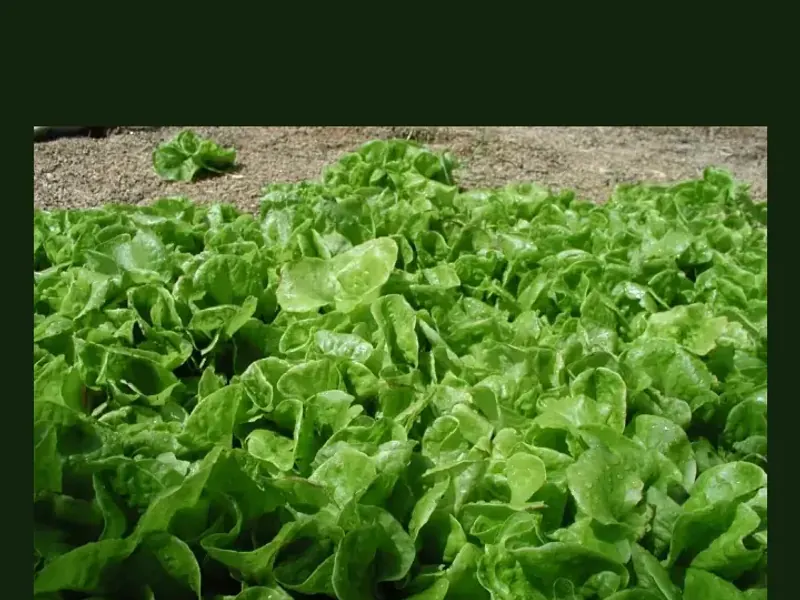
Sow a short row now, another in two or three weeks, another after that. Each round matures on its own schedule, so harvest arrives steadily rather than in one glut. The total yield is similar; what changes is that you can actually eat it.
Days to harvest is the number that drives the interval. A crop ready in 30 days sown every two weeks gives near-continuous supply. A crop taking 90 days needs a longer gap, or you simply run out of season.
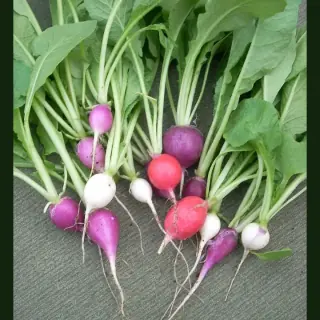
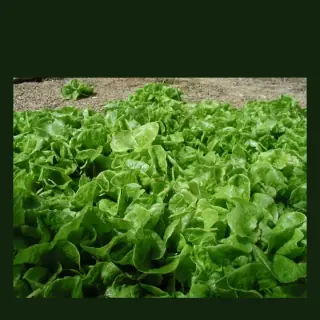
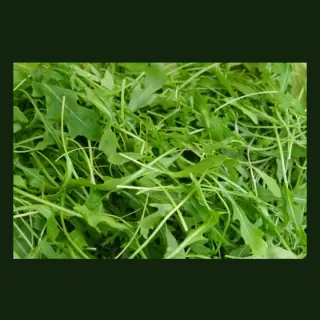
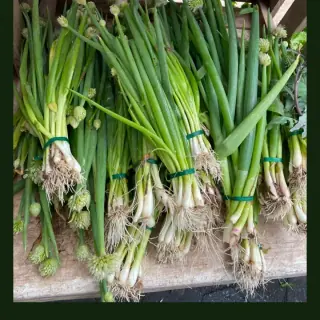
Fast enough to fit several rounds in a season.
The fastest crops in the encyclopedia. Short days-to-harvest is what makes succession practical — the quicker a round finishes, the more rounds fit in a season.
Slower crops can still be succession-sown, but with fewer rounds. For anything over about 80 days you are usually limited to two sowings a season.
Succession fails through omission, not error. The second and third sowings need to be scheduled somewhere you will actually see them, or they quietly do not happen.
A round sown too near the end of a crop's window matures into weather it cannot handle. Work backwards from the end of the sowing window rather than forwards from today.
Repeated sowings in one place concentrate the same nutrient demand and pest pressure. Rotate rounds around the bed where you can.
Succession works hardest with quick, productive crops — see the easy high-yield guide.
Each crop has a window that closes. The planting calendar shows what is still worth sowing.
Several rounds of the same family in one bed is still the same family — see the crop rotation guide.
A common approach is to divide the crop's days-to-harvest by three or four. For a crop ready in about 40 days that means sowing every 10 to 14 days. Shorter gaps suit fast crops, longer gaps slower ones.
Fast crops harvested once, such as radish, salad leaves, bush beans and spring onions, benefit most. Crops that keep producing from a single planting, such as silverbeet or tomatoes, need it far less.
It suits small gardens particularly well, because it spreads the same bed's output over a longer period rather than needing more space. Short rows are the point.
Count backwards from when conditions turn — first frost, or the hottest part of summer for cool-season crops — and allow the full days-to-harvest plus a margin. Sowing past that point wastes seed.
Recorded planting dates and expected harvest windows per zone make the gaps visible, so you can see where the next round should go rather than working it out each time.
Create a free account to save your garden layout, personal planting calendar, water and fertiliser schedules, seed inventory and harvest logs.
Create Free Account